Lymphatic drainage has become one of the biggest wellness trends across TikTok, Instagram, beauty clinics and influencer-led self-care routines. You may have seen videos claiming it can “detox” the body, sculpt the face, reduce bloating or instantly drain fluid from the legs.
But while lymphatic drainage is trending, there is also a lot of confusion about what it actually does, who it is appropriate for, and how it should be performed.
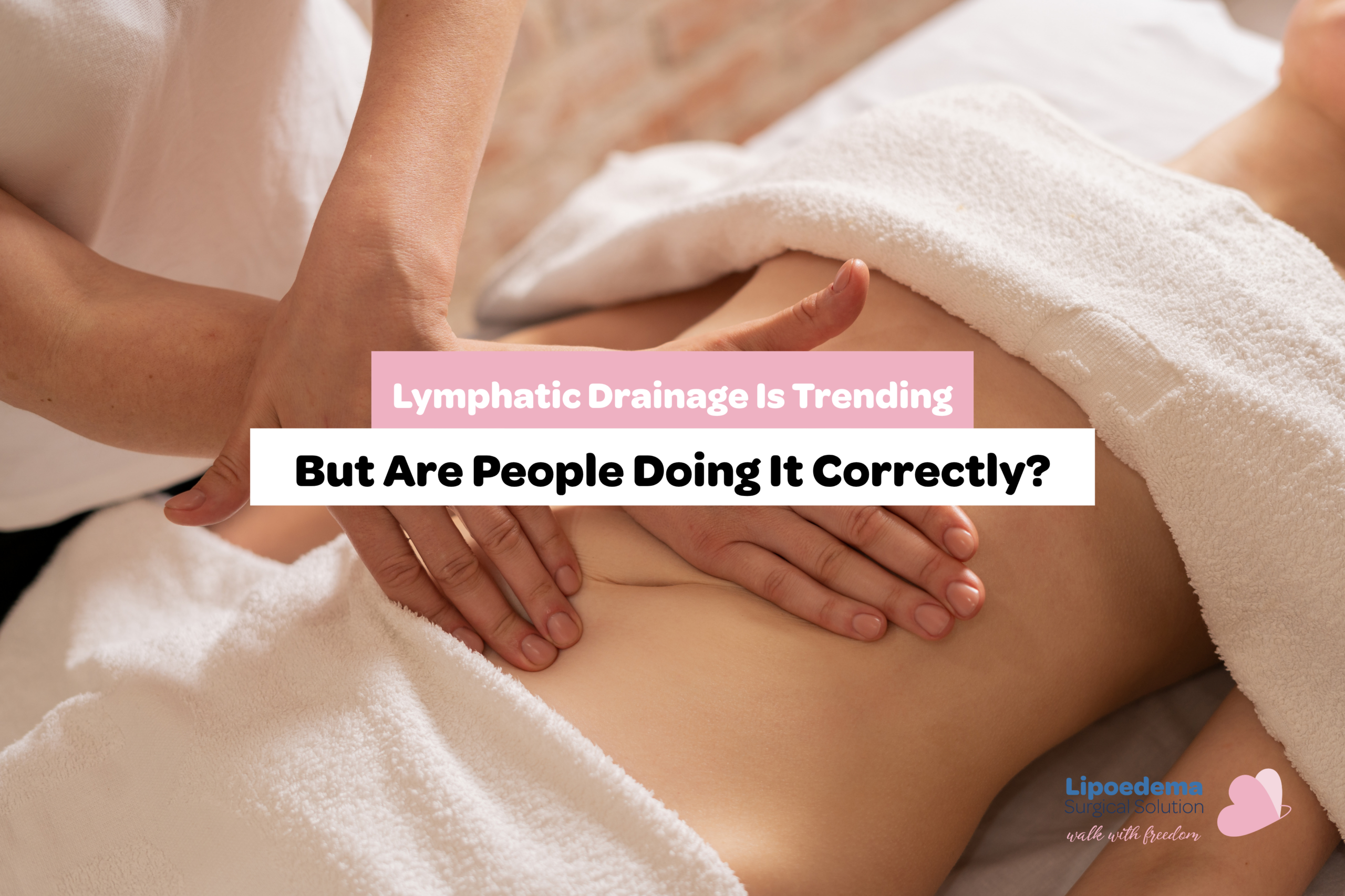
The lymphatic system is not a beauty trend. It is an important part of your immune and fluid-balance system. Manual lymphatic drainage, often called MLD, is a specialised technique used in healthcare settings, particularly for people with lymphoedema, swelling, or lymphatic compromise. MLD is a specialised, very gentle type of massage designed to stimulate the natural circulation of lymph fluid throughout the body.
So, are people doing lymphatic drainage correctly? Sometimes. But many online techniques use too much pressure, move too quickly, or oversimplify a therapy that should be gentle, precise and adapted to the individual.
What is the lymphatic system?
The lymphatic system is a network of vessels, nodes and organs that helps protect the body from infection, manage fluid levels and transport immune cells. Essentially, it as a network of delicate tubes that drains fluid from body tissues and returns it to the bloodstream.
Unlike the circulatory system, which has the heart to pump blood, the lymphatic system relies heavily on movement, breathing, muscle contraction and changes in pressure to help lymph fluid move through the body.
Lymph fluid, or lymph, is a clear fluid that contains immune cells, proteins, waste products and excess fluid from tissues. As it moves through lymph vessels, it passes through lymph nodes, where it is filtered before returning to the bloodstream.
This matters because when lymph flow is reduced or overwhelmed, fluid can build up in the tissues. This may contribute to swelling, heaviness, tightness or discomfort.
How does the lymphatic system work?
The lymphatic system works a little like a one-way drainage network.
Fluid naturally leaks from blood vessels into surrounding tissues. The lymphatic vessels collect this excess fluid and move it through progressively larger lymph channels. Along the way, lymph nodes filter the fluid and support immune surveillance. Overall, the lymphatic system helps maintain fluid balance, absorbs fats from the digestive tract, and protects the body against infection.
A healthy lymphatic system usually keeps this process balanced. You most likely may never notice it working.
Conversely, lymphatic dysfunction occurs when lymph vessels or lymph nodes are damaged, blocked, underdeveloped or overloaded. This can occur following surgery, cancer treatment, infection, trauma, chronic inflammation, or certain vascular and lymphatic conditions. When the lymphatic system cannot effectively transport fluid, swelling may develop, which is known as lymphoedema. People living with lipoedema may also experience changes in lymphatic function, particularly in more advanced stages of the condition, which can contribute to increased swelling and discomfort.
When lymphatic drainage is impaired, fluid may accumulate in the tissues. This is one reason lipoedema management often involves a combination of skin care, compression, exercise, education, and sometimes MLD.
What are your lymph nodes and what do they do?
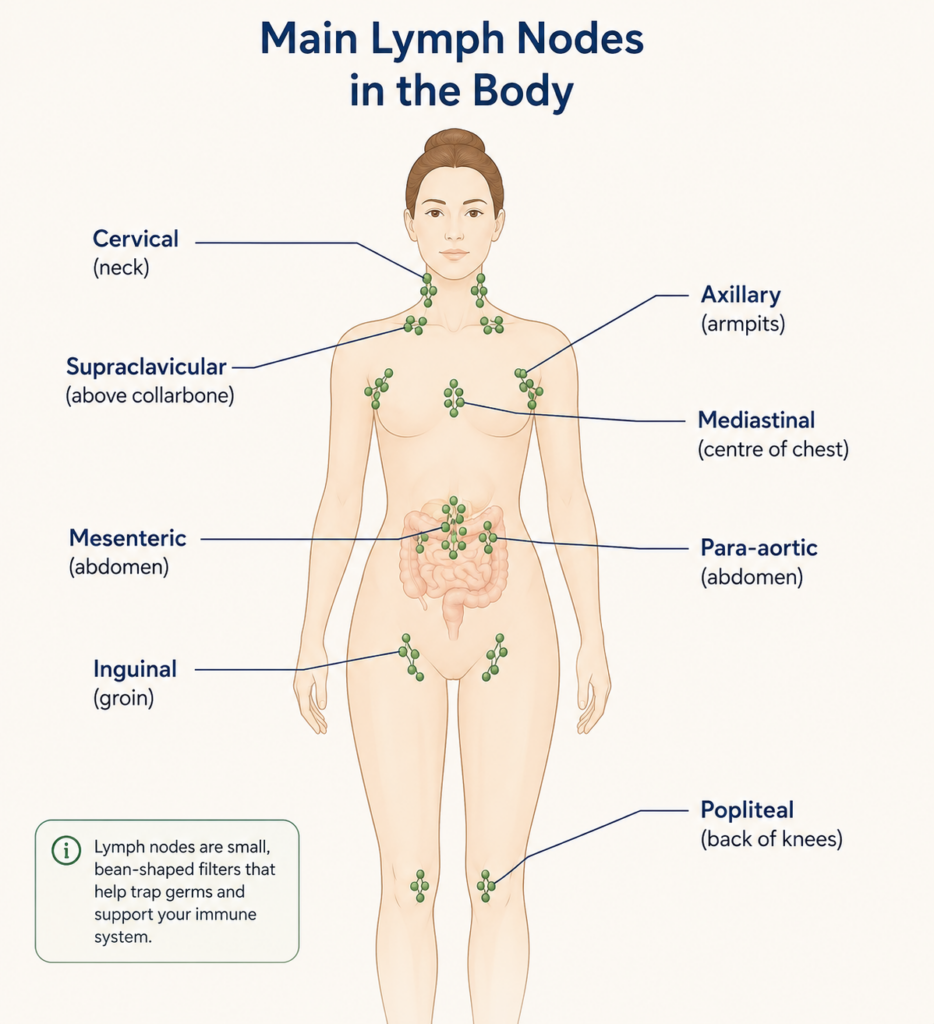
Lymph nodes are small, bean-shaped structures found along lymphatic vessels. Lymph nodes contain white blood cells, help fight infection, and filter lymph fluid.
A simple way to imagine lymph nodes is as checkpoint stations. Lymph fluid moves through the body, passes through these checkpoints, and is filtered before continuing its journey. You may have noticed before, when your immune system is responding to infection, inflammation or other illnesses your lymph nodes can become swollen.
You have hundreds of lymph nodes throughout the body. Key groups include:
Neck nodes: help drain the head, face and throat.
Armpit nodes: help drain the arms, chest and breast region.
Groin nodes: help drain the legs, lower abdomen and genital region.
Chest nodes: support drainage from the lungs and chest.
Abdominal nodes: support drainage from abdominal organs and deeper tissues.
Why is lymphatic drainage becoming so popular?
Lymphatic drainage has become popular partly because it sounds simple: light massage, visible puffiness reduction, and the promise of feeling “less bloated”. It is also being promoted by wellness clinics, beauty influencers and social media creators.
Some claims are reasonable. Gentle lymphatic techniques may help support fluid movement in appropriate circumstances, especially when taught by a trained practitioner.
Other claims are exaggerated.
Lymphatic drainage does not “detox” the body in the way social media often suggests. Your liver, kidneys, lungs, digestive system and lymphatic system all play roles in processing and clearing substances, but lymphatic massage should not be described as a detox cure.
It also should not be presented as a guaranteed way to sculpt the face, lose weight or treat unexplained swelling. Temporary changes in puffiness may occur for some people, but persistent swelling, pain or heaviness should be medically assessed.
What does the evidence actually say?
Manual Lymphatic Drainage (MLD) is best understood as a specialised therapy rather than a general wellness massage. It was originally developed to support people with lymphatic conditions and remains most used as part of comprehensive lymphoedema management.
To understand why MLD may be helpful for some people with lipoedema, it is important to understand the relationship between lipoedema and the lymphatic system. As previously stated, the lymphatic system is responsible for maintaining fluid balance, supporting immune function, and transporting excess fluid away from the tissues.
Lipoedema is primarily a disease of abnormal fat tissue rather than a disease of the lymphatic system itself. However, as lipoedema progresses, the increased volume of affected tissue may place additional demands on the lymphatic system. Some people with lipoedema experience swelling, heaviness and fluid retention, and in more advanced stages, secondary lymphatic dysfunction may occur. This is one reason why lymphatic health is an important consideration in the management of lipoedema.
For people living with lipoedema, MLD is commonly incorporated into a broader conservative management approach alongside compression therapy, movement and exercise, and lifestyle modifications. At Lipoedema Surgical Solution, these conservative management strategies are discussed as part of an individualised treatment plan and may include flat knit compression garments and Manual Lymphatic Drainage where clinically appropriate. MLD is not considered a treatment for the underlying lipoedema fat tissue, nor is it a cure for lipoedema. Instead, its role is to support lymphatic health, help manage swelling, and improve comfort for some individuals as part of a comprehensive management strategy.
Importantly, the strongest evidence for MLD remains in specific medical contexts such as lymphoedema care and post-treatment swelling management, rather than the broad wellness and “detox” claims often promoted on social media.
Are there risks with lymphatic drainage massage?
Lymphatic drainage is generally gentle, but it is not suitable for everyone. You should seek medical advice before undergoing lymphatic drainage if you have an active infection, cellulitis, untreated heart failure, a suspected blood clot (DVT), significant kidney disease, unexplained swelling, or a history of cancer requiring specialist guidance.
It’s also important to remember that lymphatic drainage is not a deep tissue massage. Lymphatic vessels sit close to the skin’s surface, so using excessive pressure may be ineffective and could even hinder lymph flow. Gentle, slow movements are key to performing lymphatic drainage correctly.
How to perform simple lymphatic drainage at home
Simple lymphatic drainage should ideally be taught by a trained lymphoedema practitioner, especially if you have lipoedema, lymphoedema, post-surgical swelling, vascular concerns or persistent symptoms.
For general wellbeing, the safest principles are:
1. Use very light pressure
Your touch should be gentle enough to move the skin, not dig into the muscle. Think of stretching the skin lightly rather than massaging deeply.
2. Slow down
Lymphatic drainage is slow and rhythmic. Fast rubbing or vigorous massage is not the goal.
3. Start near the collarbones
Many self-drainage routines begin around the collarbone area because lymph eventually returns to the bloodstream near this region.
4. Use calm breathing
Deep diaphragmatic breathing may support gentle pressure changes in the trunk, which can assist lymph movement.
5. Move towards functioning lymph nodes areas
For arms, gentle strokes are often directed towards the armpit. For legs, strokes may be directed towards the groin. However, if lymph nodes have been removed or damaged, you need individual guidance.
6. Stop if symptoms worsen
Stop and seek advice if you notice increasing pain, redness, heat, sudden swelling, dizziness, shortness of breath or feeling unwell.
In this workshop, Karen Windsor shares gentle self-massage techniques and self-care strategies that may help support lymphatic flow and complement your overall lipoedema management plan. While self-massage is not a substitute for professional Manual Lymphatic Drainage (MLD), many people find these techniques a helpful addition to their daily routine.
Common mistakes people make
The most common mistakes include pressing too hard, moving too quickly, treating lymphatic drainage like a sports massage, copying generic online routines despite medical conditions, and expecting immediate or permanent results.
Lymphatic drainage and lipoedema
Lipoedema is not a lymphatic disorder, but changes in lymphatic function can occur as the condition progresses, contributing to swelling, heaviness and discomfort for some individuals.
Supporting lymphatic health is therefore often considered alongside other conservative management strategies. At Lipoedema Surgical Solution, discussions around conservative management may include flat knit compression garments, movement, lifestyle modifications and Manual Lymphatic Drainage (MLD), depending on a patient’s presentation.
If you would like to learn more about conservative management please see our website.
Although MLD is not a treatment for the underlying lipoedema fat tissue, it may help some people manage symptoms and improve comfort as part of a holistic approach to care.
Understanding lymphatic drainage beyond the trend
Lymphatic drainage is more than a wellness trend. When performed appropriately, it can be a valuable therapeutic tool for certain people, particularly those managing swelling or lymphatic conditions.
But more pressure does not mean better results. In fact, lymphatic drainage should be gentle, slow and guided by an understanding of how the lymphatic system works.
For people experiencing persistent swelling, heaviness, pain, or symptoms that may suggest lipoedema, it is worth seeking assessment from an appropriately qualified healthcare professional. Education is often the first step towards feeling more informed, supported and confident in your care.
Is lymphatic drainage massage meant to hurt?
No. Lymphatic drainage should be gentle. Pain, bruising or deep pressure are signs the technique may not be appropriate.
Can lymphatic drainage detox the body?
Not in the way social media often claims. The body has several systems involved in processing waste, including the liver, kidneys and lymphatic system, but lymphatic drainage should not be promoted as a detox cure.
How often should you do lymphatic drainage?
This depends on your health needs. People with lymphoedema or lipoedema should follow advice from a trained practitioner or treating clinician.
Can I do lymphatic drainage at home?
Some simple techniques can be done at home, but they should ideally be taught by a trained lymphoedema practitioner, especially if you have swelling, lipoedema, lymphoedema or medical conditions. If you would like to perform a simple at home lymphatic drainage massage please refer to the workshop with Karen Windsor.
When should I avoid lymphatic drainage?
Avoid it and seek medical advice if you have active infection, suspected DVT, untreated heart failure, sudden unexplained swelling, fever, redness, heat or worsening pain.