For many women living with lipoedema, the path to diagnosis is long and the path to finding the right care can feel even longer. By the time a patient reaches a specialist, she has often already tried diet after diet, heard that her body simply needs more willpower, and been dismissed by practitioners who didn’t recognise what they were seeing.
At Lipoedema Surgical Solution, we understand that arriving here, researching surgical options, trying to understand what’s possible, represents a significant moment. This page is intended to give you clear, honest information about what surgery for lipoedema involves, when it tends to be part of a treatment conversation, and what the care pathway at Lipoedema Surgical Solution looks like.
There is no pressure here. Just information.
How Lipoedema is Diagnosed
Diagnosing lipoedema involves a clinical assessment that brings together your medical history, physical examination and, where appropriate, imaging and other investigations to exclude other causes of swelling. There is currently no single blood test or imaging scan that can confirm lipoedema, so diagnosis is based on the overall clinical picture.
1. Your Medical History
A thorough medical history helps your doctor understand when your symptoms first appeared, whether close family members have experienced similar symptoms, and whether there is a connection to hormonal changes such as puberty, pregnancy or menopause. These hormonal transitions are commonly associated with the onset or progression of lipoedema, making this information an important part of the assessment.
2. Physical Presentation
During a physical presentation, your doctor will assess the pattern of fat distribution, skin texture, tenderness, areas of nodularity within the tissue, and where swelling is present. These findings help determine whether your symptoms are consistent with lipoedema and, where appropriate, assess the severity and stage of the condition.
3. Ultrasound and Vascular Imaging
Some clinics include ultrasound as part of the assessment process. While lipoedema remains a clinical diagnosis, vascular ultrasound can help assess venous health, identify chronic venous insufficiency, and evaluate other conditions that may contribute to leg swelling. Where appropriate, it can also assist in assessing secondary lymphatic changes alongside the clinical examination.
At Lipoedema Surgical Solution, Dr Lekich and his team incorporate comprehensive ultrasound assessment to evaluate venous health and identify any underlying vascular or lymphatic conditions that may influence your diagnosis, treatment plan or surgical preparation.
The Role of Conservative Management
Surgery is not the starting point for lipoedema treatment, and at Lipoedema Surgical Solution, we don’t approach it that way. Conservative (non-surgical) management is the first line of care for all stages of the condition and for many patients, it provides meaningful, sustained relief.
Some women choose to continue with conservative management as their long-term treatment approach, particularly if their symptoms are well managed or if surgery is not the right option for their individual circumstances. For others, conservative management remains an important part of care before and after surgery to help optimise outcomes and support ongoing symptom management.
Conservative management typically includes:

1. Compression Therapy
Medical-grade compression garments help manage fluid accumulation, provide structural support to the limbs, and reduce pain during everyday activity. Getting the right garments that are properly fitted and appropriate for your stage matters.
2. Manual Lymphatic Drainage (MLD)
A specialised massage technique performed by trained therapists to support lymphatic circulation, reduce swelling, and relieve discomfort. MLD is one of the most important tools in ongoing lipoedema management and continues to play a role even for patients who proceed to surgery.
3. Lymphatic Pump System
Intermittent pneumatic compression mimics the body’s lymphatic drainage system and promotes the circulation of blood/fluid throughout the body.
4. Counselling
The emotional impact of lipoedema is just as important as the physical symptoms, and seeking support is an important part of your care. Whether through counselling, a psychologist, support groups or trusted healthcare professionals, there are resources available to help. Remember you are not alone. Our team is here to help guide and support you as you navigate your journey.
5. Movement
Low-impact exercise, particularly swimming, cycling, and walking, supports circulation and general wellbeing. For many women with lipoedema, finding movement that works for their body rather than against it is part of rebuilding a relationship with physical activity.
6. Nutritional Support
While no dietary approach reduces lipoedema fat itself, an anti-inflammatory way of eating can support symptom management and overall health. Nutritional guidance is often part of a broader care plan.
Every woman’s experience of lipoedema is different, and so is her care. For many, conservative management is the right long-term path. Not a temporary measure, but a meaningful one. Many women have experienced relief from their symptoms by following a conservative management plan.

Surgery Protocol
If surgery is recommended, you will receive a detailed Information Pack explaining how to prepare, what to expect and the recovery process.
Our protocol treats lipoedema as a medical condition rather than a cosmetic concern. Surgery is performed using Water-Assisted Liposuction Extraction within a structured, lymph-sparing approach tailored to your individual presentation.
What sets our protocol apart is the emphasis on thorough assessment, staged treatment where appropriate and patient safety. This includes evaluating venous disease and other relevant health conditions before surgery, careful perioperative planning and structured follow-up throughout recovery.
[Compare the European S2k guidelines, US guidelines and our surgical protocol in this PDF.]
What the Pathway at Lipoedema Surgical Solution Looks Like
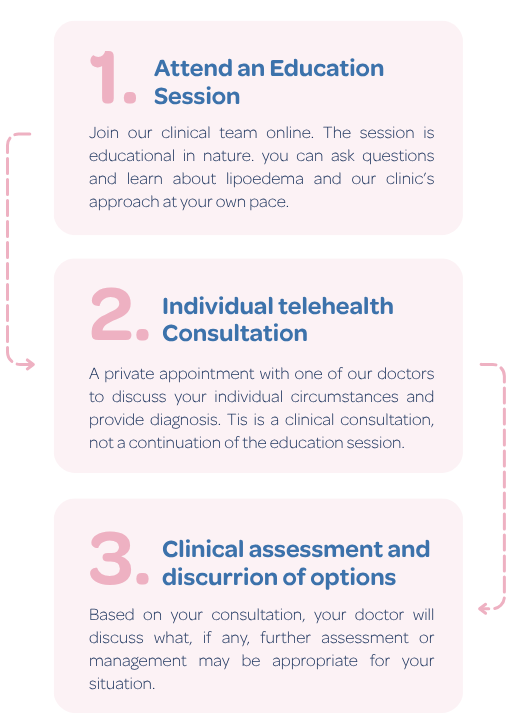
At Lipoedema Surgical Solution care is structured around a staged pathway. Surgery where it is considered sits within a broader clinical relationship, not as a standalone procedure.
Surgery and Post-Operative Care
For patients who proceed with surgery, treatment is followed by a structured recovery program. This includes compression therapy, manual lymphatic drainage (MLD), regular follow-up, and ongoing conservative management to support recovery and optimise long-term outcomes.
Because lipoedema is a chronic condition, conservative management remains an important part of care after surgery, helping to support lymphatic health, mobility and overall wellbeing over time.
If You're Still Working Out Whether This Is Right For You
Our Group Education Session is the first step in the Lipoedema Surgical Solution pathway. Held online via Zoom, this interactive 90-minute session is led by one of our doctors and provides an introduction to lipoedema, conservative management, common comorbidities, and the surgical pathway.
It’s an opportunity to learn alongside other women living with lipoedema, ask questions directly to the doctor, and gain a clearer understanding of your options before deciding on your next step. Many patients find they arrive at their individual telehealth consultation feeling more informed and better prepared to discuss their own circumstances.
Your partner, family member or support person is welcome to join from the comfort of home, your camera can remain off if you prefer, and there is no obligation to continue beyond the session. It’s simply an opportunity to access reliable information in a supportive, low-pressure environment.
FAQ's
What age does lipoedema start? What are the triggers?
Lipoedema is most commonly triggered around puberty. However, some women may not notice significant changes until later in life as lipoedema is often associated with hormonal events such as pregnancy or menopause, or in the presence of other medical conditions such as autoimmune disease.
Lipoedema is a progressive condition; however, progression varies significantly between individuals. Some women experience symptoms from adolescence, while others notice changes much later. Many patients report a lifelong predisposition, often recognised in retrospect by leg shape, ankle contour, or early swelling.
While conservative management can slow progression and reduce symptoms, hormonal triggers may still worsen the condition over time.
What are the cost and inclusions of a consultation?
New Patients
Education Session — $93
A 90-minute group education session where Dr Lekich provides an overview of Lipoedema and the holistic protocol for diagnosis and treatment. You’ll have the opportunity to ask questions directly to Dr Lekich. You’re welcome to keep your camera off if you prefer.
One-on-One Telehealth Consultation — $217
A private telehealth appointment after the education session to discuss your symptoms and medical history, diagnosis, staging and explore appropriate management options.
Existing Patients — Further Assessment
If you’d like to progress to a surgical management plan, the following assessments may be required:
- CVI Mapping — $400 (Out of pocket)
- TCD “Bubble” Test — $485 (Out of pocket)
Existing Patients — Consultation
Telehealth Consultation — $250
A 30-minute one-on-one telehealth consultation with Dr Lekich. Use this appointment to ask questions, review scans, or reassess your Lipoedema management plan.
Further information about the Lipoedema Management Pathway is available on our website here.
Surgery cost inclusions
Costs vary depending on the areas treated and the number of surgical stages required.
You will be given a quote from the doctor addressing your specific situation and surgical plan.
This quote usually includes:
- hospital theatre and facility fees
- overnight hospital stay
- surgical consumables
- surgical team and procedural costs
- routine immediate postoperative care
- blood tests and ultrasound assessment before discharge
Anaesthesia fees are typically approximately $1,800 to $2,700, depending on the duration and complexity of the procedure. Fees may be higher when multiple areas or additional procedures are incorporated.
Because phlebologists also assess and treat venous disease, vein treatments may sometimes be incorporated into the surgical plan where clinically appropriate. When this occurs, it may reduce the need for separate procedures and additional visits. The suitability of this approach varies between patients.
Following assessment, your doctor will confirm:
- the diagnosis and stage of lipoedema
- the areas requiring treatment
- associated venous or lymphatic conditions
- suitability for surgery
A personalised treatment plan and cost estimate will then be provided to ensure informed financial consent before any procedure is undertaken.
Is lipoedema surgery funded in Australia?
Funding for lipoedema surgery in Australia remains limited and it’s something many women understandably want to know before exploring their options.
Currently, lipoedema surgery is not covered by Medicare. There is no dedicated MBS item number for the procedure, which means it is largely an out-of-pocket cost for most patients. This is a genuine barrier to access, and one that reflects the broader gap in recognition of lipoedema as a serious, chronic disease.
Private health insurance may offer some coverage depending on your level of cover and how your individual fund classifies the procedure. It’s worth contacting your insurer directly to understand what may apply to you.
At Lipoedema Surgical Solution, we are strong advocates for greater recognition of lipoedema including pushing for funding and policy changes that would make treatment more accessible for Australian women. That work continues, because we believe it matters.
In the meantime, the Lipoedema Surgical Solution team can walk you through what costs are involved and what options may be available as part of your consultation.