PCOS Is Now PMOS: What's Changed?
For decades, Polycystic Ovary Syndrome (PCOS) has been one of the most common yet misunderstood women’s health conditions. Affecting an estimated 1 in 10 women, PCOS has long been associated with irregular periods, fertility challenges, weight changes, insulin resistance and hormonal symptoms.
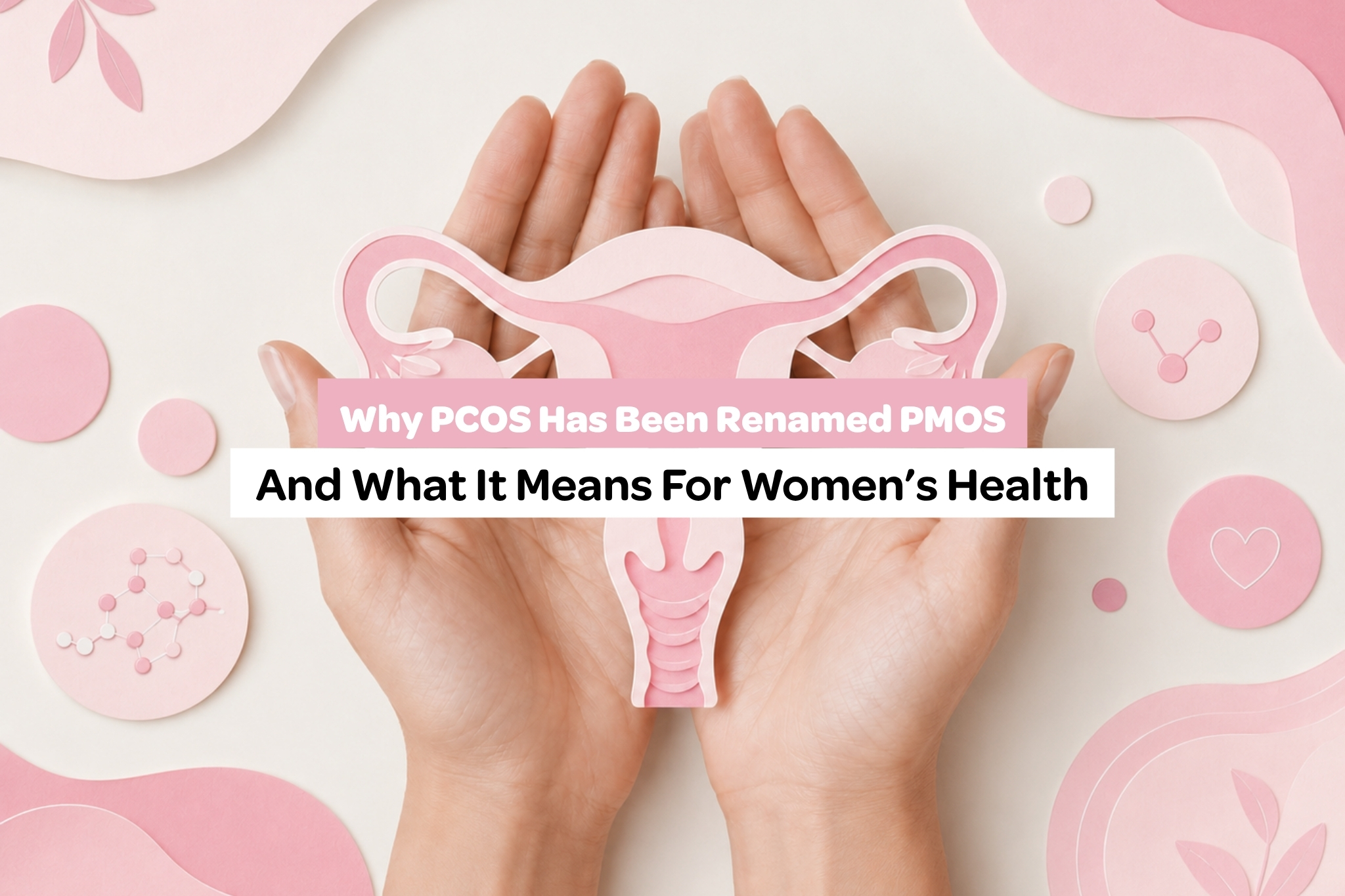
Now, international experts have officially recommended a new name: Polyendocrine Metabolic Ovulatory Syndrome (PMOS).
While the condition itself has not changed, the new name reflects a growing understanding that PCOS is far more complex than its original label suggests.
For many women, this change represents more than a simple rebrand. It highlights an important shift in medicine towards recognising the full complexity of women’s health conditions and moving beyond outdated terminology.
It’s also a conversation that may feel familiar to many people living with lipoedema.
Why Was PCOS Renamed?
The term “Polycystic Ovary Syndrome” has been criticised for many years because it does not accurately describe the condition for everyone diagnosed with it.
Despite the name, not all women with PCOS have polycystic ovaries. In fact, ovarian cysts are not required for diagnosis.
The name has also been criticised because it focuses on one visible feature of the condition while overlooking the broader hormonal, metabolic and reproductive changes that many patients experience.
Researchers and clinicians increasingly recognised that the name failed to capture the true nature of the condition.
The new name aims to better reflect what is actually happening within the body.
What Does PMOS Stand For?
Polyendocrine
The word “polyendocrine” acknowledges that multiple hormone systems can be involved.
PMOS may affect reproductive hormones, insulin regulation, androgen levels and other endocrine pathways throughout the body.
Metabolic
Many people with PMOS experience metabolic features such as insulin resistance, altered glucose metabolism and increased cardiometabolic risk.
Including “metabolic” in the name highlights that this is not simply a reproductive condition.
Ovulatory
Ovulation dysfunction remains one of the core features of the condition.
Many women experience irregular menstrual cycles or difficulties with ovulation, which can affect fertility and reproductive health.
Syndrome
The term syndrome reflects that PMOS is a collection of signs and symptoms rather than a single disease process.
Not every person experiences the condition in the same way.
What Does This Mean for Patients?
Importantly, the name change does not alter how PMOS is diagnosed or managed overnight.
Patients currently diagnosed with PCOS do not suddenly have a different condition.
However, the new terminology may help improve understanding among healthcare professionals, researchers and the wider community.
A more accurate name can encourage broader discussions about metabolic health, hormonal function and long-term health considerations rather than focusing solely on ovarian appearance.
Ultimately, the goal is to improve awareness, education and patient care.
Individuals who would like to better understand related hormonal, metabolic and lipoedema considerations can also explore our patient resources, which are designed to support education and informed conversations with healthcare providers
Why This Matters Beyond PMOS
The move from PCOS to PMOS reflects a broader shift occurring across medicine.
As research advances, healthcare professionals are gaining a deeper understanding of many complex chronic conditions. Sometimes, existing names no longer reflect what the science tells us.
This is particularly relevant in women’s health, where many conditions have historically been under-recognised, misunderstood or oversimplified.
A name may seem like a small detail, but it often shapes how conditions are perceived by healthcare providers, policymakers, researchers and patients themselves.
What Does This Have to Do with Lipoedema?
For people living with lipoedema, the discussion around PMOS may feel surprisingly familiar.
Like PMOS, lipoedema is often misunderstood and frequently misdiagnosed.
Many women spend years seeking answers before receiving a diagnosis. Symptoms are commonly attributed to weight gain, obesity, lifestyle factors or simple fluid retention, despite lipoedema being a distinct chronic condition.
Both PMOS and lipoedema can involve:
- Delayed diagnosis
- Hormonal influences
- Chronic inflammation
- Weight-related stigma
- Significant impacts on quality of life
- The need for long-term management
Importantly, both conditions highlight the risks of reducing complex diseases to a single visible feature.
Just as PMOS is about much more than ovarian cysts, lipoedema is about much more than enlarged legs or excess fat tissue.
Lipoedema can involve pain, tenderness, swelling, mobility challenges, easy bruising and significant physical and emotional impacts.
Understanding the condition requires looking beyond appearance alone.
Could There Be a Link Between PMOS and Lipoedema?
Researchers continue to explore potential relationships between hormones, metabolism and adipose tissue disorders.
While PMOS and lipoedema are separate conditions, hormonal changes may play a role in the development and progression of both conditions.
Many women report the onset or worsening of symptoms during times of hormonal change, including puberty, pregnancy and menopause. This overlap has led researchers and clinicians to investigate potential connections between conditions such as PMOS and lipoedema. As highlighted by Total Lipedema Care, both conditions may involve hormonal influences, inflammation, metabolic dysfunction and challenges with weight management, although the exact relationship between them remains unclear.
Researchers are still working to better understand these relationships, and more high-quality research is needed before definitive conclusions can be made.
What is clear, however, is that both conditions deserve greater awareness, earlier diagnosis and more comprehensive support.
Why Accurate Diagnosis Matters
One of the biggest challenges facing women with chronic health conditions is delayed diagnosis.
When conditions are poorly understood, symptoms may be dismissed, misinterpreted or attributed to unrelated causes.
Earlier recognition can help patients access:
- Appropriate investigations
- Individualised management plans
- Conservative treatment options
- Education and support
- Better long-term health outcomes
This is true for PMOS, lipoedema and many other chronic conditions affecting women.

Looking Ahead
The transition from PCOS to PMOS reflects a growing understanding of the complexity of women’s health.
While changing a name does not change the condition itself, it can change the way we think about it, talk about it and ultimately care for the people affected by it.
For those living with lipoedema, the discussion serves as a reminder of the importance of awareness, education and accurate diagnosis. If you would like more information on lipoedema we encourage you to join our lipoedema education session.
As research continues to evolve, better terminology and better understanding can help ensure that women receive the recognition, support and care they deserve.
Has PCOS officially been renamed PMOS?
Polycystic Ovary Syndrome (PCOS) has been renamed Polyendocrine Metabolic Ovulatory Syndrome (PMOS) following an international consensus process aimed at creating a name that better reflects the complexity of the condition.
The change was led by Australian endocrinologist Professor Helena Teede from Monash University in Melbourne, who chaired the international initiative alongside researchers, clinicians and consumer advocates from around the world.
The new name acknowledges that the condition involves multiple hormonal, metabolic and reproductive systems, rather than focusing solely on the ovaries.
Why was PCOS renamed?
The previous name focused on ovarian cysts, even though not all women with the condition have polycystic ovaries. The new name better reflects the hormonal, metabolic and reproductive features involved.
Does PMOS change treatment options?
Not immediately. The name change itself does not alter the treatments currently used to manage the condition, which may still include lifestyle interventions, support for metabolic health, medications, and management of ovulatory and hormonal symptoms.
However, many experts believe the new name could have an important long-term impact on how the condition is recognised and treated.
By moving beyond a name that focuses primarily on the ovaries, PMOS highlights the broader hormonal, metabolic and reproductive aspects of the condition. This may encourage healthcare professionals to take a more holistic approach to assessment and management, rather than focusing solely on fertility or ovarian findings.
Improved recognition of the metabolic and endocrine features of PMOS may also help reduce delays in diagnosis, support earlier intervention, and encourage more personalised treatment plans that address the full range of symptoms and health impacts experienced by each individual.
As awareness grows, the name change may also help drive future research, improve education for healthcare professionals, and strengthen understanding of how PMOS can affect a woman’s health throughout different stages of life.
Is PMOS related to Lipoedema?
PMOS and lipoedema are distinct conditions, but they can share several overlapping features and may occur together in some women.
Both conditions are strongly influenced by hormonal factors and commonly emerge or worsen during times of hormonal change, such as puberty, pregnancy and menopause. They are also associated with chronic inflammation, changes in fat tissue function and challenges with weight management.
Women with PMOS may experience insulin resistance and metabolic dysfunction, while women with lipoedema often develop disproportionate fat accumulation that does not respond predictably to diet and exercise. As a result, both conditions can be misunderstood or incorrectly attributed solely to lifestyle factors.
Research and clinical observations suggest that women with lipoedema may have a higher prevalence of hormonal and metabolic conditions, including PMOS. While PMOS does not cause lipoedema, and lipoedema does not cause PMOS, the two conditions may share underlying hormonal and metabolic pathways that contribute to their development and progression.
Importantly, both conditions are frequently underdiagnosed, can have a significant impact on quality of life, and often require a comprehensive, long-term management approach tailored to the individual.
Why do medical names matter?
Names influence awareness, diagnosis, research priorities and public understanding. A more accurate name can help improve recognition and support for people living with the condition.