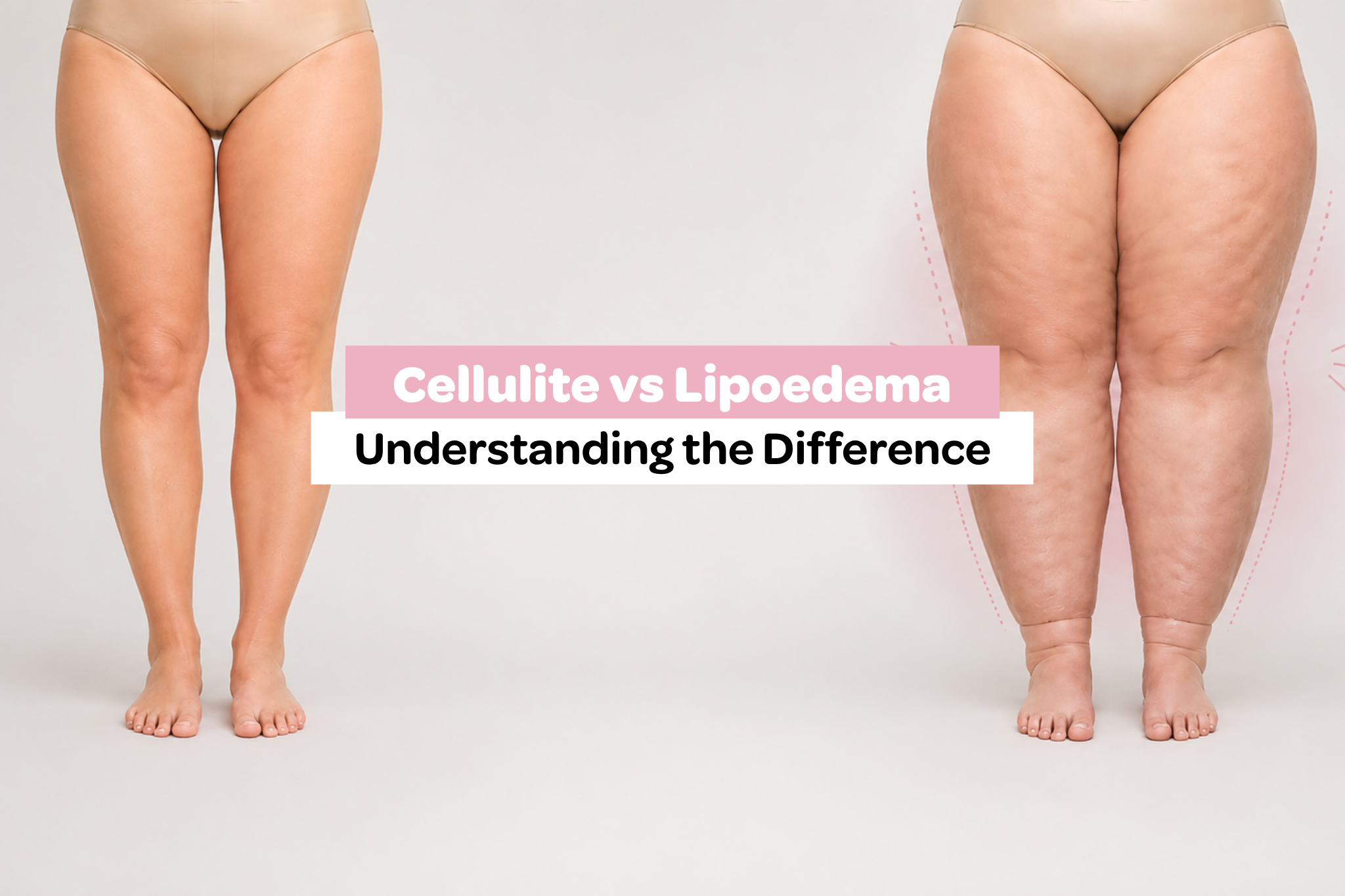
Cellulite and lipoedema can both affect the appearance and texture of the skin, particularly around the thighs, hips and legs. Because they can look similar, women living with undiagnosed lipoedema sometimes assume the changes they are noticing are simply cellulite.
However, the two are not the same. Cellulite is a very common skin characteristic that creates a dimpled or uneven appearance. Lipoedema is a chronic medical condition involving a disproportionate build-up of fatty tissue, which may also cause pain, tenderness, heaviness and easy bruising.
Understanding how they differ can help women recognise when changes in their body may deserve further medical attention.
What is cellulite?
Cellulite is the term for skin that appears dimpled, puckered or uneven. It commonly develops around the thighs, hips, buttocks and abdomen.
The texture occurs when fatty tissue beneath the skin pushes upwards while fibrous connective bands pull downwards, creating the familiar dimpled or “orange peel” look. It is extremely common, particularly in women after puberty, with research estimating that it affects roughly 80 to 90 per cent of women. It can occur across different ages, body shapes and fitness levels, and is not necessarily connected to being overweight.
Cellulite is generally considered a cosmetic skin concern rather than a medical condition.
What is lipoedema?
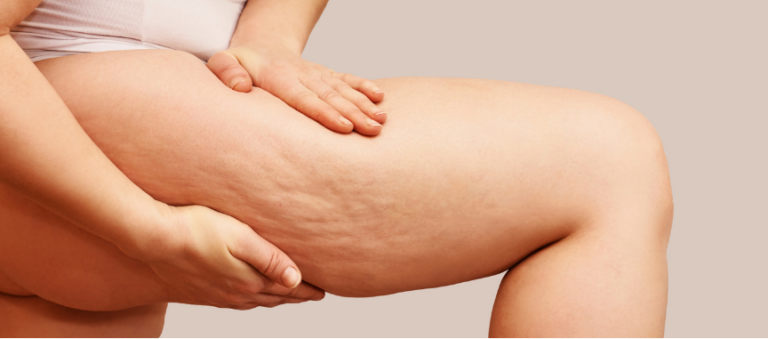
Lipoedema is a chronic condition involving an abnormal and disproportionate accumulation of fatty tissue. It occurs almost exclusively in women and most commonly affects the legs, hips and buttocks, though the arms may also be involved.
Unlike cellulite, lipoedema can involve multiple symptoms as well as the visible changes. Women may experience pain, tenderness, pressure sensitivity, heaviness, swelling and easy bruising in the affected areas.
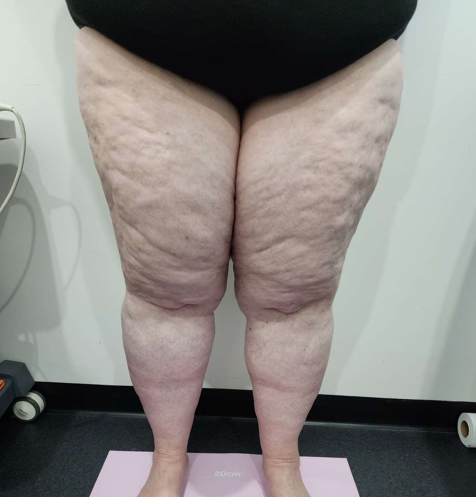
The tissue develops symmetrically, so both legs or both arms are affected in a similar way, and the lower body may appear noticeably out of proportion with the upper body. In many cases the feet are spared, which can create a distinct change in shape or a cuff-like appearance around the ankles. When the arms are involved, the hands are also commonly spared.
Importantly, lipoedema is not caused by a lack of willpower. While maintaining overall health remains valuable, this tissue does not respond to diet and exercise the way general body fat does.
Lipoedema versus cellulite: the key differences
Both conditions can create an uneven skin texture, but several features help tell them apart.
Feature | Cellulite | Lipoedema |
Classification | A common cosmetic skin characteristic | A chronic medical condition |
Appearance | Dimpled, puckered or uneven skin | Disproportionate tissue that may initially create a smooth, column-like shape through the legs and become increasingly uneven, dimpled or nodular as the condition progresses. |
Common locations | Thighs, hips, buttocks and abdomen | Usually the legs, hips and buttocks, sometimes also the arms |
Pattern | May appear in isolated areas | Usually affects both sides of the body symmetrically |
Pain or tenderness | Usually, painless | Pain and tenderness often occur |
Bruising | x | Easy or unexplained bruising may occur |
Heaviness | x | The affected limbs may feel heavy or uncomfortable |
Swelling | x | Swelling, or changes that worsen through the day, may occur |
Feet and hands | x | Feet and hands are commonly spared |
Response to weight loss | Visibility may change with body composition | Doesn’t typically respond to diet or exercise |
No single feature confirms or rules out lipoedema. A clinical assessment looks at the overall pattern of tissue distribution, symptoms, medical history and other possible causes together.
Can lipoedema look like cellulite?
Yes. Lipoedema tissue can have a dimpled, rippled or uneven texture that resembles cellulite. In its earlier stages the skin may still look relatively smooth while the tissue underneath feels soft, nodular or spongy. As things change, the surface and shape of the limbs may become increasingly uneven.
This visual overlap is one of the main reasons lipoedema is overlooked. But appearance is only part of the picture — cellulite alone does not explain ongoing pain, easy bruising, symmetrical enlargement of both legs, or feet that stay unaffected while the legs grow larger.
A person can also have both cellulite and lipoedema at the same time. Visible cellulite does not rule out an underlying medical condition.
Does cellulite cause painful legs?
Generally, no. Cellulite may make some people feel self-conscious, but it does not usually cause chronic pain, tenderness or significant heaviness. Painful or tender tissue should not automatically be dismissed as cellulite.
Lipoedema, by contrast, often involves pain when pressure is applied, along with aching or sensitivity that becomes more noticeable after standing, activity or later in the day. Other conditions such as venous disease and musculoskeletal problems can also cause leg pain, which is why an individual assessment matters if you suspect you have lipoedema.
How can you tell whether you have cellulite or lipoedema?
You often can’t tell from the skin alone, and that’s the key point: the difference is less about how the limb looks and more about how it feels and behaves.
Rather than searching for one deciding sign, it helps to look at the overall pattern. Cellulite tends to be superficial dimpling on its own. Lipoedema is more likely when several features appear together — symmetrical, disproportionate enlargement, tenderness within the tissue, easy bruising, heaviness, and limited change after general weight loss.
None of this is a self-diagnosis checklist. Lipoedema is diagnosed clinically, and further assessment may be needed to investigate other conditions that cause similar symptoms.
Why lipoedema can be mistaken for cellulite or weight gain
Lipoedema remains poorly understood in many healthcare and community settings, and its presentation varies considerably from one woman to the next. Some develop noticeable disproportion, while others first experience pain, bruising or heaviness without an obvious change in body shape. As a result, it is often mistaken for cellulite, general weight gain, obesity or lymphoedema and because it can coexist with any of these, the picture isn’t always visually clear.
The most important distinction is that lipoedema is not solely about appearance. It can affect comfort, mobility, physical function and quality of life. Recognising these broader effects can help women seek informed medical advice rather than continuing to blame themselves for changes they cannot explain.
When should you seek medical advice?
Consider speaking with a healthcare professional if several of the signs described above occur together, particularly persistent or unexplained changes such as painful tissue, easy bruising, symmetrical enlargement of both limbs, or a noticeable imbalance between your upper and lower body that doesn’t shift with weight loss.
Some symptoms need prompt attention rather than a routine appointment. Sudden swelling, redness, warmth, significant pain or shortness of breath should be assessed quickly, as these may signal a condition other than lipoedema.
Looking beyond appearance
Cellulite is common and usually harmless, it changes the skin’s texture but does not typically cause pain, bruising, heaviness or symmetrical enlargement of the limbs.
Lipoedema is a chronic medical condition that can involve disproportionate tissue growth alongside those symptoms, commonly affecting both sides of the body while sparing the feet and hands. The two can look similar, and some women have both. The real difference lies not in how the skin looks, but in how the affected areas feel and how the symptoms shape daily life.
When changes in your legs or arms are painful, persistent or difficult to explain, they deserve to be taken seriously.
Learn more about Lipoedema
If you are wondering whether your symptoms may be consistent with lipoedema, education can help you better understand the condition and the available care pathway.
The Lipoedema Surgical Solution pathway begins with an online Group Education Session, followed by an individual telehealth consultation with a doctor. This allows your symptoms, medical history and questions to be discussed before any recommendations are made.