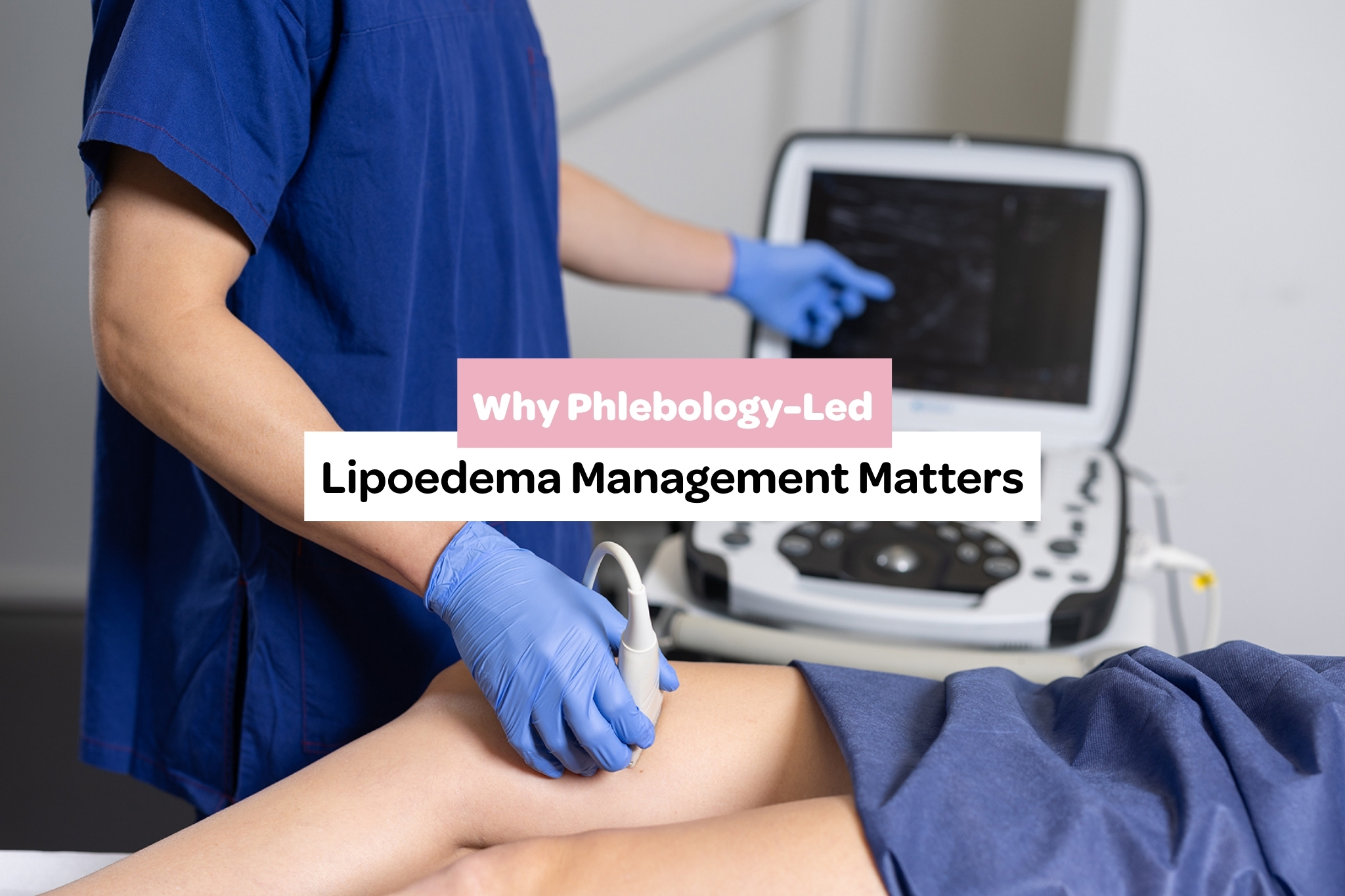
Phlebology-led care brings a deep understanding of the venous and lymphatic systems. The same systems that lipoedema directly affects. This means your condition is assessed and managed with the full circulatory picture in mind, not just the appearance of your legs.
If you’ve spent years being told your legs are just a weight problem — that you need to eat less, move more, or try the latest weight loss medication — you’re not alone. Thousands of women with lipoedema have sat in consulting rooms and heard exactly the same things. The problem isn’t your lifestyle. The problem is that lipoedema has been hiding in plain sight, and the medical system has largely been missing it.
At Lipoedema Surgical Solution, we approach lipoedema through a model led by vein and vascular specialists — one that treats it as the complex, progressive disorder of fat tissue it actually is. This post explains what that means, why it matters, and what it looks like in practice.
Lipoedema Is Not a Cosmetic Problem
One of the most harmful misconceptions about lipoedema is that it’s cosmetic. It isn’t.
Lipoedema is a progressive, inflammatory, painful condition affecting fat tissue, with deep connections to the circulation and the lymphatic system (the network of vessels that drains fluid from your tissues). It doesn’t respond to diet, exercise, weight loss surgery, or medications like Ozempic. It’s largely genetic, often triggered by hormonal changes such as puberty, pregnancy, or menopause, and it can worsen over time if left unmanaged.
It’s estimated to affect around 11% of women globally, and that figure is likely an underestimate, with many researchers placing the true number closer to 15% or higher. Most of those women go undiagnosed for years, sometimes decades. Many are misdiagnosed with obesity, lymphoedema, or simply told their pain isn’t real.
That missed diagnosis has a cost. Lipoedema is a progressive disease, and time matters.
You're Probably Already Seeking Help - And Not Getting Answers
Women with lipoedema are already in the healthcare system. They’re visiting GPs, specialists, physiotherapists, and allied health practitioners. But because the condition is so frequently misunderstood — or missed entirely — they often cycle through appointments without answers, collecting diagnoses that don’t quite fit.
The pattern is usually recognisable when you know what to look for:
- Fat that builds up disproportionately in the legs and arms, and doesn’t shift with diet or exercise
- Pain, heaviness, and easy bruising in affected areas
- Difficulty walking or reduced mobility over time
- A strong family history, particularly on your mother’s side
- Symptoms that started or worsened at a hormonal turning point — puberty, pregnancy, menopause, surgery, or a period of significant stress
- Anxiety, depression, or a complicated relationship with food and your body — these are part of the condition, not separate problems
If this sounds familiar, you’re not imagining it. And you’re not alone.
What Does Your Circulation Have to Do With It?
You might wonder why a Phlebology expert would lead your lipoedema care. Here’s why it makes sense.
Lipoedema isn’t just about fat. It involves three systems working or struggling together: the fat tissue itself, the veins, and the lymphatic system. In most patients, these don’t present in isolation.
Here’s what’s happening at a basic level: when lipoedema fat builds up, it can press on the tiny blood vessels in the surrounding tissue. This pressure can cause fluid and proteins to leak out into the tissue. The lymphatic system then must work harder to drain that fluid away and if it’s already under strain, it can’t keep up. The result is a cycle of inflammation, swelling, pain, and gradual tissue change that gets worse over time.
Understanding that cycle rather than just looking at how your legs appear is what separates disease-focused lipoedema care from cosmetic treatment.
If Surgery Becomes the Right Step: What Assessment Looks Like
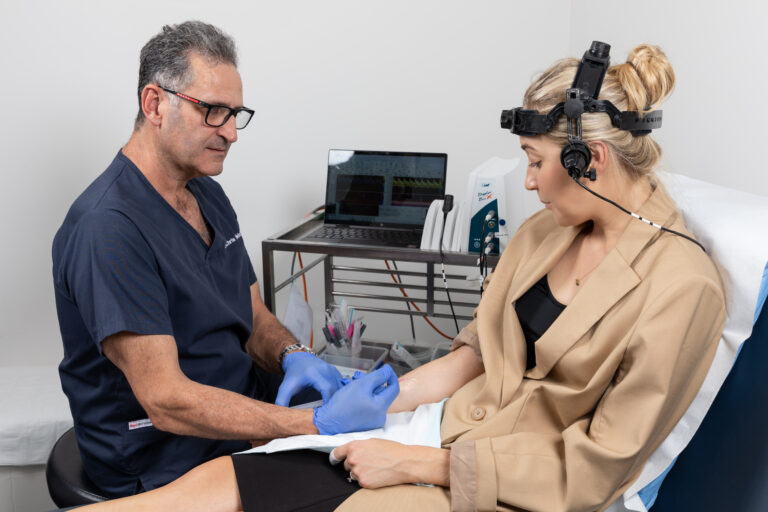
For patients who reach the point where surgery is being considered, the assessment process goes well beyond a visual examination. Because lipoedema involves your circulation and lymphatic system, understanding how those systems are functioning is an important part of planning safe surgery.
Depending on your situation, investigations may include:
Where appropriate an ultrasound of your veins, to check for venous insufficiency — where valves in the veins aren’t working properly, causing blood to pool — and to assess for signs of lymphatic involvement in the tissue.
Arterial screening where relevant, because problems with arteries and veins can sometimes coexist, particularly if you have other vascular health concerns in your history.
A proposed heart screening test (Transcranial Doppler) to check for a right to left shunt that is an abnormal mixing of venous blood with arterial blood, often a PFO or “hole in the heart” if large and significant can lead to health issues and surgery related stroke. About one in four people have this and most never know, it may not cause any problems. But in the context of surgery, especially if large, an undetected right to left shunt/PFO can allow particles released during the procedure such as fat, air and tiny clots to reach the brain’s circulation instead of being filtered out by the lungs. Identifying this before surgery means your team can plan appropriately, adjust the anaesthetic approach, and refer you to a cardiologist if needed.
This level of risk stratification is poorly understood and discussed outside of our protocol and is designed to empower patients to make decisions that are informed that relate to serious complications that occur when significant right to left shunts are overlooked.
Other Conditions That Often Come With Lipoedema
Lipoedema rarely appears on its own. Many patients carry other diagnoses, or undiagnosed conditions, that are closely connected.
These can include vein compression in the pelvis or chest, increased clotting risk, a condition called POTS (where your heart rate spikes abnormally when you stand up), hypermobility or Ehlers-Danlos Syndrome (where joints and connective tissue are unusually flexible), hormonal conditions like polycystic ovarian syndrome (PCOS) or endometriosis, insulin resistance, and autoimmune conditions such as rheumatoid arthritis, lupus, or Sjögren’s syndrome.
Gut health is also part of the picture for many patients. Bloating, constipation, and poor gut function can all add to the inflammation that drives lipoedema symptoms and they’re worth addressing as part of a broader management plan.
A phlebology-led model doesn’t just treat your legs. It looks at the whole person, and where needed, coordinates care with cardiologists, rheumatologists, anaesthetists, and allied health practitioners before, during, and after surgery.
We cover the most common lipoedema comorbidities in more detail over on our Instagram — it’s a good starting point if you’re trying to make sense of a complex picture.
Conservative Management: The Starting Point
Surgery is not where we begin. For many patients, conservative (non-surgical) management is the foundation of care, both as a long-term treatment in earlier stages, and as essential preparation for those who go on to have surgery.
Conservative care typically includes:
Compression Garments:
The cornerstone of lipoedema management. Worn consistently, they reduce fluid build-up and support the lymphatic system in draining excess fluid.
Manual Lymphatic Drainage (MLD)
A specialised, gentle massage technique that helps move fluid through the lymphatic system, reduces inflammation, and eases discomfort. It’s also important in recovery after surgery.
Anti-inflammatory eating
Lipoedema fat doesn’t shrink with calorie cutting, but reducing inflammation through the way you eat can meaningfully reduce pain and swelling. This isn’t about losing weight. It’s about managing the condition.
Exercise chosen for your body
Not as a weight loss strategy, but to protect your joints, support circulation, and keep the lymphatic system moving.
Psychological support
The mental health burden of living with lipoedema is real and well-documented. Addressing it is part of comprehensive care.
If you would like to read more information regarding conservative management. Head to our website.
Surgery: When It's the Right Step
For patients who have pursued conservative management without sufficient relief or who are at a stage where surgery is clinically appropriate — liposuction may be the next step in their management plan. The surgical method used is the Lipoedema Surgical Protocol Solution. At LSS we use a Water-Assisted Lipoedema Extraction (WALE) technique that is different from cosmetic plastic surgery liposuction, even though WAL is used for sculpturing and aesthetics. This is chosen specifically to protect the lymphatic vessels and to get as close to 100% removal of the diseased lipoedema fat.
This is not cosmetic liposuction. The goal is to reduce the inflamed fat that’s driving your symptoms, relieve pressure on the lymphatic system, and improve your mobility pain and progression and improve quality of life.
Surgery is done in stages rather than all at once. This allows for proper recovery and monitoring between sessions, and reflects a careful, measured approach to your care.
The current international clinical guidelines which are developed collaboratively by phlebology societies, explicitly support this lymph-preserving approach as the preferred surgical method for lipoedema.