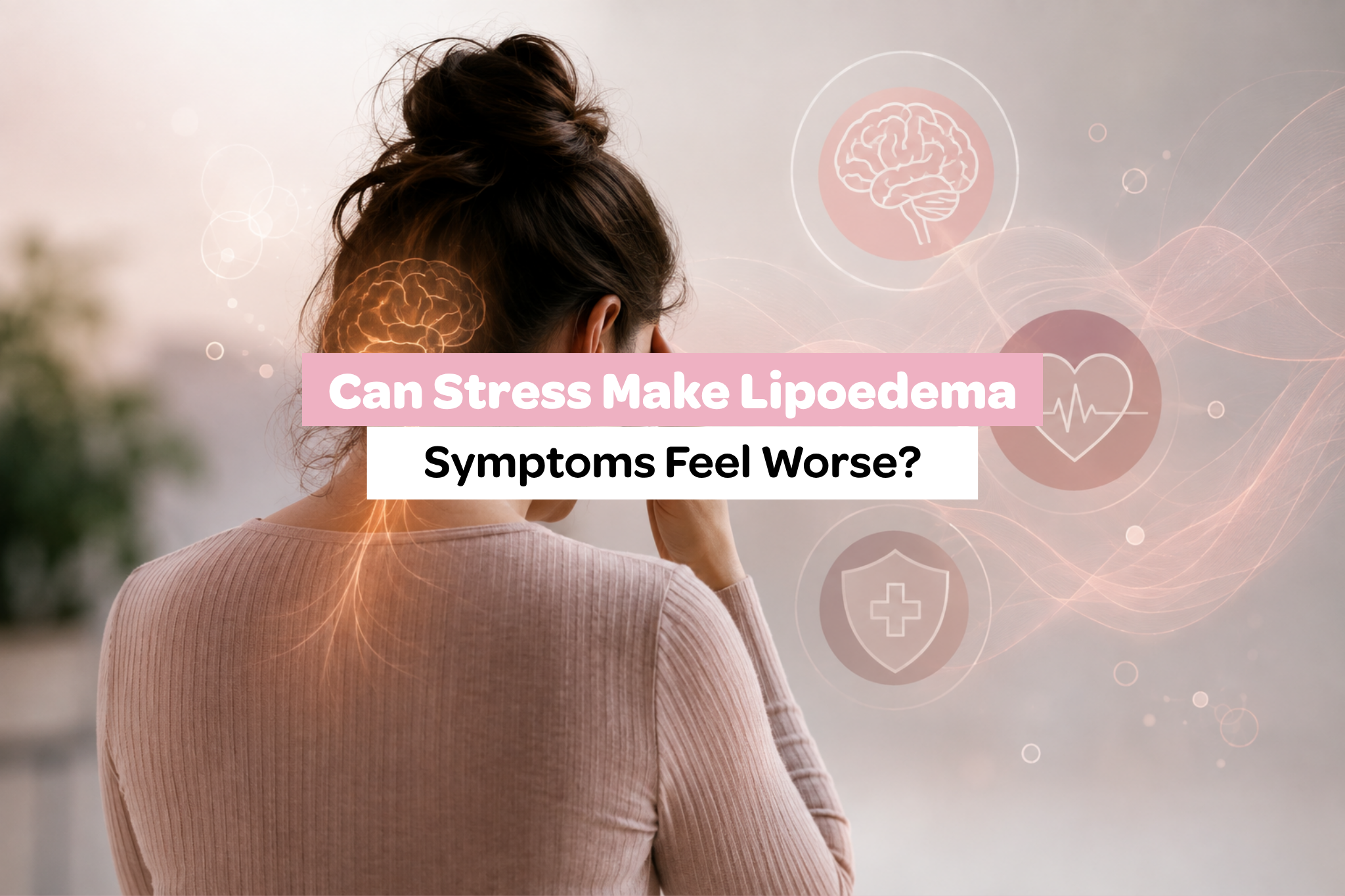
Many women living with lipoedema notice that their symptoms feel worse during stressful periods. Their arms or legs may feel heavier, more tender or swollen, while pain and fatigue become harder to manage.
Research has not shown that stress directly causes lipoedema to progress. However, broader research into stress, inflammation and pain provides several possible explanations for why existing symptoms may temporarily intensify.
What is a lipoedema symptom flare-up?
“Flare-up” is not a formally defined medical term in lipoedema research. It is commonly used to describe a temporary period when existing symptoms become more noticeable or difficult to manage.
During a flare-up, someone may experience:
- Increased pain or tenderness
- Greater heaviness or aching
- A feeling of increased swelling or tightness
- Heightened sensitivity to touch
- Increased fatigue
- More difficulty moving comfortably
Stress may temporarily intensify lipoedema symptoms by influencing inflammation, pain sensitivity, sleep and the routines used to manage the condition. While other factors may also play a role, stressful periods can make existing symptoms feel more noticeable and harder to manage.
What happens in the body during stress?
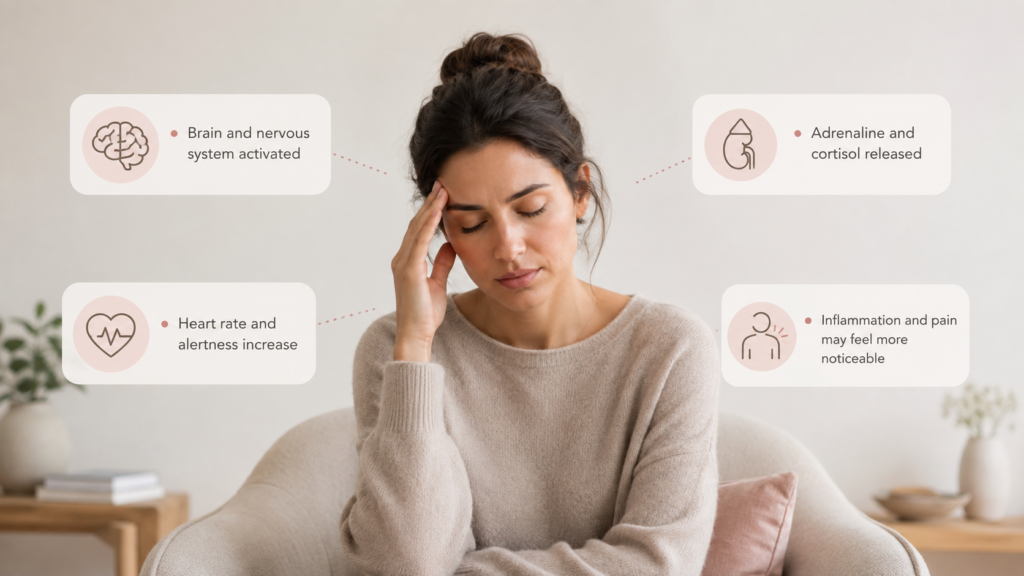
Stress activates two closely connected systems: the autonomic nervous system and the hypothalamic-pituitary-adrenal axis, commonly called the HPA axis.
These systems release hormones such as adrenaline and cortisol to help the body respond to a demanding or threatening situation. This response can be useful in the short term as cortisol helps regulate energy, blood pressure, metabolism and immune activity.
However, when stress continues for a prolonged period, the body’s stress-response systems may become dysregulated. Research into chronic stress has linked this dysregulation with changes in cortisol activity, inflammation and pain processing.
This does not mean that cortisol is always harmful or that every stressful experience causes inflammation. It means that ongoing stress can affect several systems involved in how pain and other physical lipoedema symptoms are experienced.
Can stress increase inflammation?
The relationship between stress and inflammation is complex. Depending on the type, intensity and duration of the stress, the immune system may produce both inflammatory and anti-inflammatory responses.
With prolonged or intense stress, this balance can become disrupted. The body may become less responsive to the signals that normally limit inflammation, allowing inflammatory activity to continue for longer periods.
This may help explain why tenderness, aching or swelling can feel more noticeable during stressful periods. However, research has not yet confirmed that stress directly increases inflammation within lipoedema tissue.
How can disrupted sleep affect lipoedema symptoms?
Stress can interfere with sleep, making it harder to fall asleep, stay asleep or feel rested. Poor sleep can increase pain sensitivity and fatigue, which may make lipoedema symptoms such as aching, tenderness and heaviness feel more difficult to manage.
It can also reduce the energy available for movement, compression and other routines that may help manage symptoms.
Stress can make symptom management feel more difficult
During stressful periods, everyday routines can become harder to maintain. Reduced energy, limited time and emotional strain may affect how regularly someone moves, wears compression, prepares meals or attends appointments.
Spending longer sitting or standing and moving less throughout the day may add to feelings of heaviness, stiffness or swelling. These temporary changes do not necessarily mean that lipoedema has progressed, but they may make symptoms feel more noticeable.
What may help during a stressful period?
Stress management is not a treatment for lipoedema itself. However, reducing physical and emotional strain may make symptoms easier to manage.
During a stressful period, it may help to focus on simple and achievable steps, such as gentle movement, wearing prescribed compression, taking regular breaks from prolonged sitting or standing and protecting sleep where possible.
Relaxation techniques, slower breathing and emotional support may also help reduce the ongoing strain of stress. The aim is not to follow a perfect routine, but to maintain the parts of your care that feel manageable while symptoms are more noticeable.
When should you seek medical advice?
Not every increase in pain or swelling should be assumed to be related to stress.
Speak with your healthcare provider if symptoms are new, persistent, significantly different from usual or becoming more difficult to manage.
Seek urgent medical attention for sudden swelling in one limb, redness, warmth, severe or rapidly increasing pain, chest pain or shortness of breath, as these symptoms may require prompt assessment.
Understanding the connection
Research has not shown that stress directly causes lipoedema to progress. However, prolonged stress may affect inflammatory regulation, disrupt sleep and make established symptom-management routines more difficult to maintain.
Together, these effects may help explain why tenderness, heaviness, swelling, pain and fatigue can feel more noticeable during stressful periods.
Recognising this connection does not mean dismissing symptoms as “just stress”. It means understanding stress as one factor that may temporarily influence how lipoedema symptoms are experienced.
Speak with our team
If your lipoedema symptoms are becoming more difficult to manage, our team can help you understand the next steps in your care.
Learn more about lipoedema and the Lipoedema Surgical Solution care pathway on our website, or call our team on 1800 367 534 to speak with us directly.