Lipoedema — also commonly spelled lipedema — affects an estimated 1 in 10 Australian women, yet awareness and understanding of the condition remain limited.
For women experiencing unexplained pain, heaviness, swelling, easy bruising or disproportionate changes in their legs or arms, learning about lipoedema can provide important context for symptoms they may have been living with for years.
But finding information is only one part of the journey. In Australia, it can be difficult to know who to speak to, how lipoedema is diagnosed, what treatment options are available and whether Medicare or private health insurance provides financial support.
We have created this guide to make those pathways clearer and help Australian women feel more informed when deciding what to do next.
Lipoedema awareness in Australia
Lipoedema is a chronic condition involving an abnormal accumulation of adipose (fat) tissue, primarily affecting the legs and sometimes the arms. It can be associated with pain, swelling, tenderness, easy bruising and challenges with mobility.
Despite the number of women affected, lipoedema remains widely misunderstood and misdiagnosed.
Some women spend years believing the changes they are experiencing are simply related to their weight, cellulite or natural body shape. Others may seek help for pain or swelling without receiving an explanation that fully reflects their experience.
Growing awareness is helping more women recognise that there may be a medical explanation for these changes. From there, the focus can shift from trying to work it out alone to finding appropriate information, assessment and support.

How is lipoedema diagnosed in Australia?
Assessment involves considering your symptoms, medical history and physical presentation.
The lipoedema education session is the first step of the process at Lipoedema Surgical Solution. During this online group call Dr Lekich will provide an overview of Lipoedema, as well as how you can understand the holistic protocol for diagnosis and treatment.
The call is interactive with yourself, the Doctor and the other participants and is a great way to learn more about Lipoedema, as well as the stories and questions raised by other participants. There will be an opportunity to ask questions directly to Dr Lekich. You’re welcome to leave your camera off if you prefer.
It is also important to consider whether other conditions could be contributing to your symptoms. Swelling, for example, is not always caused by lipoedema. Lymphatic and vascular conditions may occur independently or alongside it.
How do I find a lipoedema specialist in Australia?
Searching for a “lipoedema specialist” in Australia can be confusing because lipoedema does not sit neatly within one medical specialty.
It is also important to understand that no Australian medical curriculum provides lipoedema-specific training. A healthcare professional’s title alone therefore does not necessarily tell you how much specific training or experience they have in assessing or treating lipoedema.
Rather than relying on a title, it can be helpful to ask a healthcare professional about their actual experience with the condition. This could include their approach to assessment, relevant lipoedema training, whether they consider lymphatic and vascular health, the conservative management options they recommend and, if surgery is being considered, their specific training and scope of practice.
Lipoedema care can also involve a broader healthcare team. Depending on your individual needs, this might include your GP, doctors involved in lipoedema assessment, lymphoedema or MLD therapists, physiotherapists, exercise physiologists, dietitians, occupational therapists and other appropriately qualified practitioners.
At Lipoedema Surgical Solution, our approach considers lipoedema alongside lymphatic and vascular health, rather than looking at the affected tissue in isolation.
What does Medicare cover for lipoedema in Australia?
This is understandably one of the biggest questions for Australian women seeking lipoedema care.
In Australia, Medicare does not provide rebates or cover specialised liposuction or surgical treatment specifically for lipoedema. The procedure is generally classified as cosmetic rather than medically necessary within the Medicare system, and there are no dedicated Medicare item numbers for lipoedema surgery.
While lipoedema is now recognised internationally in the the CD-11 classification system (WHO code EF02.2), this recognition has not translated into a specific Medicare-funded treatment pathway in Australia. As a result, many women will find that diagnosis, conservative management and treatment involve significant out-of-pocket costs.
Medicare support instead depends on the individual healthcare service being provided and whether it aligns with an existing Medicare item. Some GP consultations and certain diagnostic investigations may attract a Medicare rebate, however this does not extend to lipoedema-specific surgical procedures.
For surgery in particular, there is no Medicare item for liposuction performed for the treatment of lipoedema, and existing liposuction item numbers apply only to specific medical indications that do not include lipoedema.
There may still be some avenues for partial financial support within the broader healthcare system. Patients with chronic medical conditions may be eligible for Medicare-supported allied health services through a GP Management Plan or Chronic Disease Management Plan. This can help subsidise care such as physiotherapy, podiatry, exercise physiology, occupational therapy or dietetic support, depending on individual needs.
Some women with secondary lymphoedema may also be eligible for state-based compression garment subsidy schemes, although eligibility criteria and levels of support vary between states. We recommend checking the relevant scheme in your state for current details.
For most women, however, the absence of a dedicated Medicare pathway means that lipoedema-related care, particularly surgical treatment is largely self-funded.
At any stage of your care, you may wish to speak with your GP, healthcare providers and private health insurer to better understand any potential rebates, subsidies and out-of-pocket costs that may apply to you.
Does private health insurance cover lipoedema?
In most cases, private health insurance provides little or no cover for lipoedema surgical treatment. This is because many insurers classify this type of treatment as cosmetic, which can mean that surgical costs and even the hospital stay are not covered.
Some policies may provide limited benefits for related aspects of care, such as vein treatment or flat knit compression garments, depending on your level of hospital and extras cover.
We recommend contacting your private health insurer directly at any stage of your care to confirm what, if anything, your policy may cover and what out-of-pocket costs may apply.
What does the lipoedema treatment pathway look like at Lipoedema Surgical Solution?
There is no single treatment pathway that is appropriate for every woman with lipoedema. Your care should take into account your symptoms, mobility, medical history, general health and how lipoedema is affecting your everyday life.
At Lipoedema Surgical Solution, we follow a phlebology-led protocol that considers not only lipoedema tissue, but also the lymphatic and venous systems. This helps our doctors build a more complete understanding of your condition and identify other factors that may be contributing to symptoms such as pain, swelling or changes in mobility.
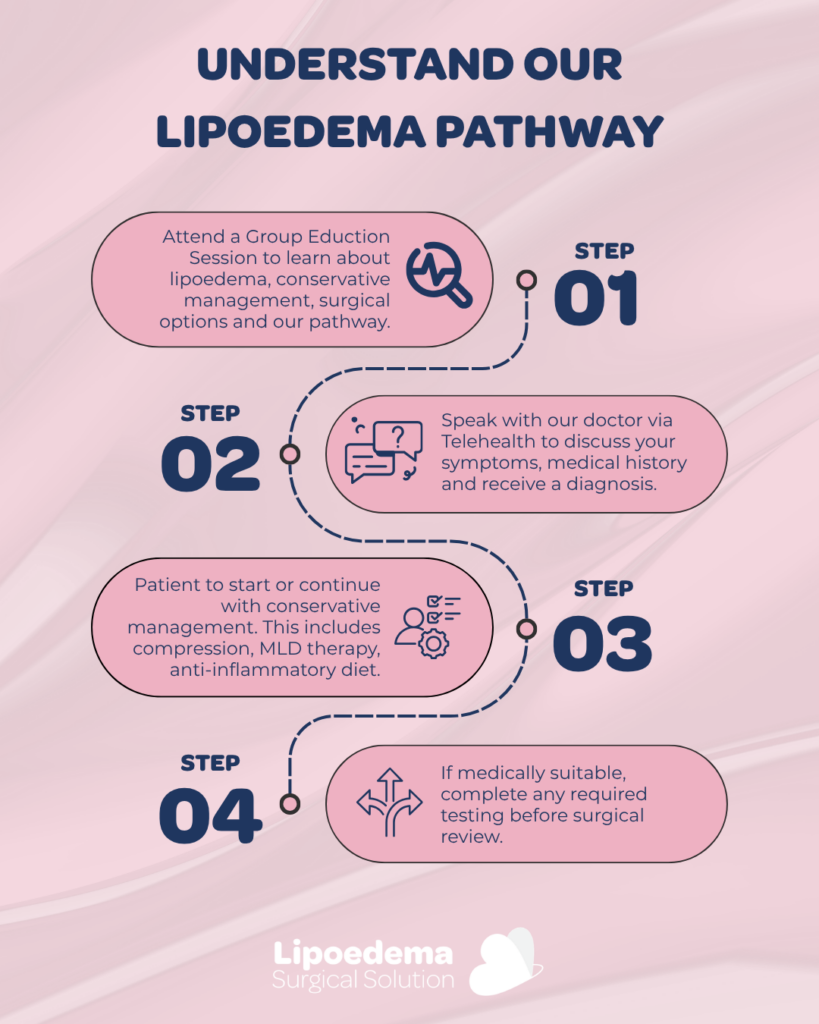
Our telehealth-first consultation process begins with education and an individual assessment, followed by in-person testing and consultation where appropriate. Ultrasound assessment may form part of this process to identify conditions such as lymphoedema, venous disease or other vascular issues that may need to be considered as part of your care.
Conservative management is an important part of our treatment pathway and may include flat knit compression garments, Manual Lymphatic Drainage (MLD), and appropriate diet and lifestyle measures. These strategies form part of ongoing lipoedema management whether or not surgery is being considered.
For patients considering surgery, our protocol requires at least eight weeks of conservative management before being deemed surgery ready. Any identified comorbidities or other health considerations must also be appropriately assessed and managed.
If you and your doctor determine that surgery is appropriate for you, your doctor will develop an individual surgical plan and discuss the proposed procedure, potential risks and benefits, alternatives and expected costs so you can make an informed decision about your care.
Conservative management
Conservative management is an important part of lipoedema care and can support symptom management, mobility and overall wellbeing. It can be relevant at different stages of lipoedema and whether or not surgery is something you are considering.
At Lipoedema Surgical Solution, we encourage women to understand and explore conservative management as part of their individual care. There is no single approach that will be right for everyone, and your management plan may change depending on your symptoms, lifestyle and broader health needs.
Conservative management may include:
- Compression garments
- Manual Lymphatic Drainage (MLD)
- Movement and exercise
- Nutrition and lifestyle support (Anti-inflammatory diet is highly recommended)
Support from a broader healthcare team
Lipoedema care may involve more than one healthcare professional. Depending on your individual needs, your care team may include your GP, physiotherapist, lymphoedema or MLD therapist, exercise physiologist, dietitian, occupational therapist or other appropriately qualified practitioners.
Conservative management is not simply something women need to “try before surgery”. It can be an ongoing part of caring for your body and managing lipoedema, including for women who do not want or are not suitable for surgical treatment.
For women who are considering surgery, conservative management also forms part of our pathway. Our current process includes compression, MLD and diet and lifestyle measures before surgery, with the aim of supporting the individual and preparing them appropriately for the next stage of care.
Surgical treatment
For some women, surgery may be considered following appropriate medical assessment and conservative management.
Where surgery is being explored, it is important to understand the doctor’s relevant training and experience, their scope of practice, the assessment process and what pre- and post-operative care involves.
Surgery is not considered in isolation. Women progressing towards surgery undergo assessment and preparation that can include conservative management, vascular investigations and other testing according to their individual circumstances.
Surgery is not appropriate for everyone, and treatment decisions should be based on an individual’s clinical presentation, symptoms and broader health rather than appearance or lipoedema stage alone.
Where do I start if I think I have lipoedema?
If you have been researching lipoedema because some of the symptoms or changes feel familiar, you don’t need to have everything worked out before seeking information or support.
You don’t need to know what stage you may have, and you don’t need to have decided what treatment you want.
It can be helpful to make a note of what you have been experiencing. Consider when you first noticed changes, which areas are affected, whether both sides of your body are affected similarly and whether you experience pain, tenderness, bruising, heaviness or swelling. You may also want to note how your symptoms affect your comfort, movement or everyday activities.
You can use this information to begin a conversation with your GP or another healthcare professional with relevant experience in lipoedema. At Lipoedema Surgical Solution, we offer a 90-minute online Lipoedema Education Session.
This session may be helpful if you...
Have noticed changes in your legs or arms that don’t respond to diet or exercise
Feel like your body doesn’t match your lifestyle efforts
Have been told it’s “just weight” but something doesn’t feel right
Have already heard of lipoedema and want to understand it properly
The session is open to anyone seeking information about lipoedema — whether you have a formal diagnosis, are exploring whether your symptoms may relate to lipoedema, or simply want to understand more about the condition and available management options.
Finding lipoedema information and support in Australia
Navigating a condition that is still not widely understood can feel overwhelming, particularly when you are also trying to understand diagnosis, treatment, Medicare and private health insurance.
At Lipoedema Surgical Solution, education is an important part of our approach. We want women to have access to clear information, understand the questions they can ask and feel supported in making informed decisions about their health.
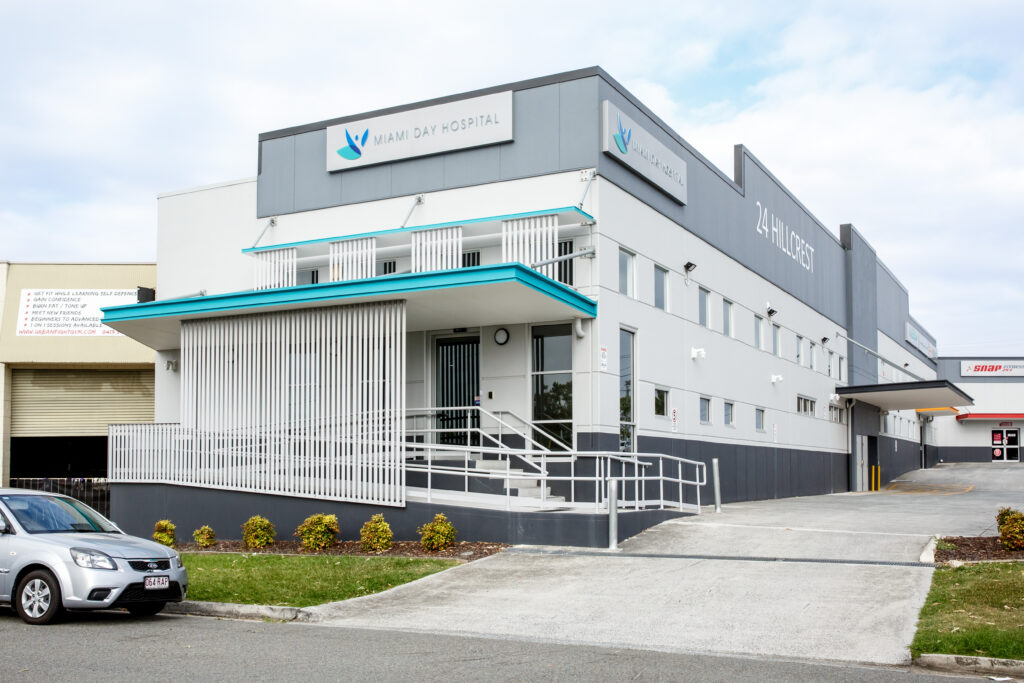
Our telehealth-first process means women from across Australia can begin by learning about lipoedema and discussing their individual circumstances before deciding what they would like to do next. Where further assessment is appropriate, our in-person consultations and diagnostic services are available at our clinic in Miami on the Gold Coast.
Your next step might simply be learning more. It might be speaking with your GP, exploring conservative management or seeking an individual assessment. There is no need to have your entire pathway mapped out from the beginning.
If you would like to continue learning about lipoedema, we highly recommend that you attend one of our Lipoedema Education Sessions.