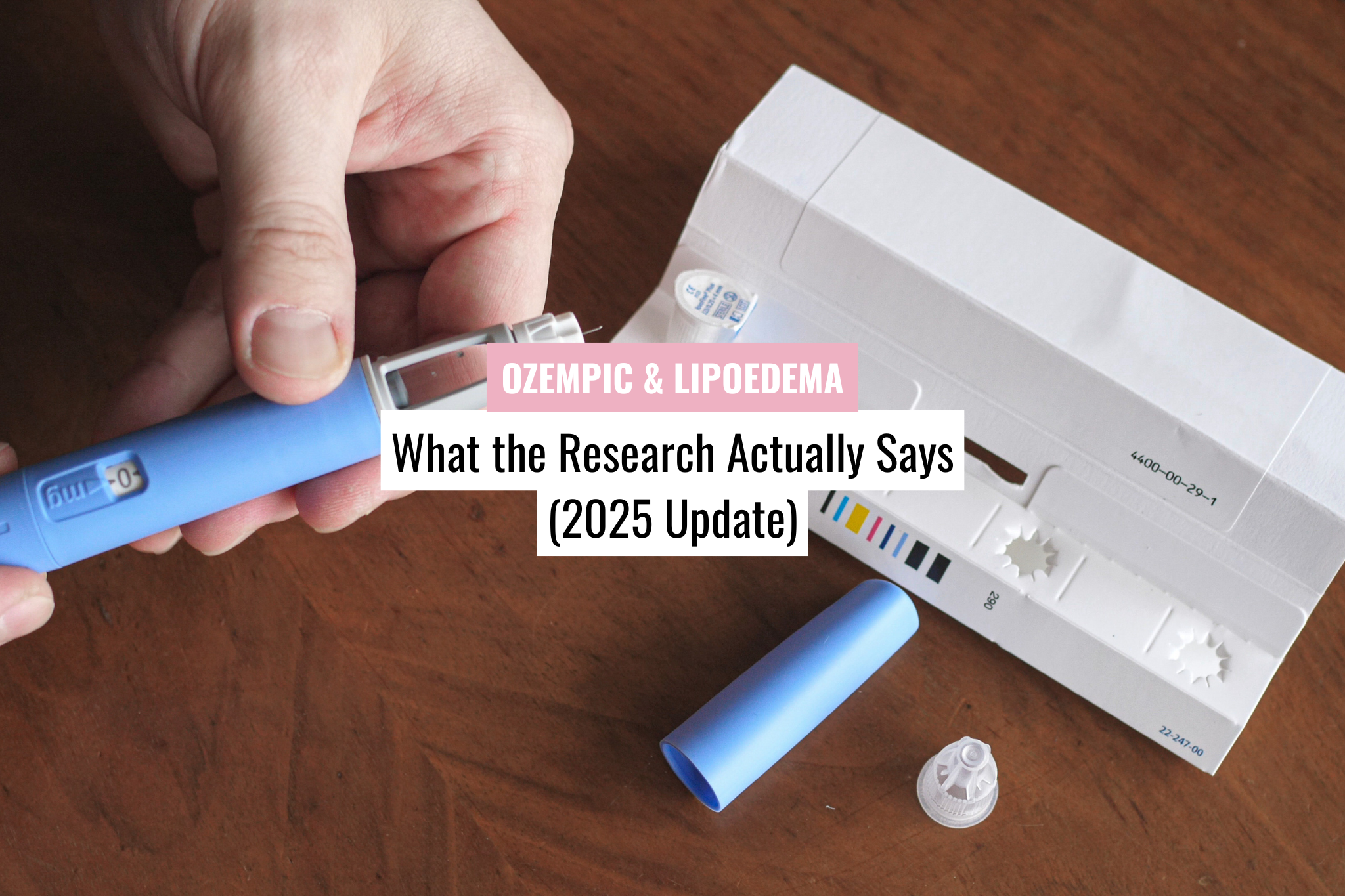

Over the past two years, there has been an explosion of interest in medications like Ozempic® (semaglutide) and Mounjaro® (tirzepatide). These drugs were originally developed for type 2 diabetes that have since become widely known for weight-management benefits.
As public awareness of these medications has grown, so too have questions about whether they might help people living with lipoedema, a chronic, painful fat-distribution disorder that primarily affects women.
In 2023, at the Lipedema World Congress in Potsdam, Germany, metabolic and hormonal mechanisms were major themes. Researchers and clinicians examined how insulin resistance, inflammation and genetic signalling influence lipoedema tissue and what that means for future therapies.
Here’s a factual, research-based look at what we currently know (and don’t know) about GLP-1 medications such as Ozempic in relation to lipoedema.
How Ozempic works
Ozempic (semaglutide) belongs to a class of medications called GLP-1 receptor agonists.
These drugs mimic the natural hormone glucagon-like peptide-1, which helps:
- regulate insulin release and blood-sugar levels,
- slow stomach emptying, and
- signal fullness to the brain.
The result is typically reduced appetite and improved metabolic control, which can lead to significant weight loss in people with obesity or type 2 diabetes.
Because many women with lipoedema also struggle with metabolic dysfunction or secondary obesity, there’s understandable curiosity about whether GLP-1 drugs could provide additional benefits.
Evidence specific to lipoedema is limited
To date, no large clinical trials have investigated Ozempic, Mounjaro or any GLP-1 medication specifically for lipoedema. The available research focuses on obesity and insulin resistance more broadly.
During Lipedema World Congress presentations, clinicians highlighted that while patients report moderate to significant improvements in leg heaviness or inflammation when metabolic control improves, these observations are anecdotal rather than proven outcomes.
Weight loss ≠ removal of lipoedema fat
A key message from multiple Lipedema World Congress speakers was that lipoedema fat behaves differently to ordinary fat. It is fibrotic, hormonally reactive and resistant to diet or exercise.
This means that even when overall body weight decreases, whether through lifestyle change, medication or bariatric surgery the disproportionate fat deposits in the legs and arms often remain.
GLP-1s may still have indirect benefits
Although GLP-1 drugs do not target lipoedema fat directly, experts noted potential secondary benefits:
- Improved insulin sensitivity may reduce systemic inflammation.
- Weight stabilisation can lessen mechanical strain on joints and venous return.
- For patients preparing for surgery, better metabolic control may improve recovery and anaesthetic safety.
However, these are general metabolic effects, not lipoedema-specific treatments.
Key Takeaways from the Congress
- Lipoedema is a distinct medical condition, now recognised by the World Health Organization (ICD-11 EF.02.2).
- Hormones and metabolism are interconnected but the underlying triggers remain under investigation.
- Medication research is ongoing: GLP-1 drugs are being discussed as potential adjuncts—tools that may help women manage associated weight or insulin issues, not as disease-modifying therapies.
- Multidisciplinary care remains the standard: compression, lymphatic support, targeted nutrition, and when appropriate, lymph-sparing liposuction.
Questions to Ask Your Specialist
If you are considering Ozempic or any metabolic medication, discuss:
- Is it clinically indicated for me? (e.g., presence of diabetes or obesity)
- Could it interact with my current treatment plan?
- What outcomes are realistic? (weight stabilisation vs fat-distribution change)
- Should this be part of a broader lipoedema-care program?
Your healthcare provider can interpret the emerging research in context and ensure any medication is prescribed safely and appropriately taking into account your past relevant medical history.
The Bottom Line
Interest in drugs like Ozempic for lipoedema reflects an encouraging shift toward understanding the metabolic and hormonal dimensions of this condition.
Still, experts at the Lipedema World Congress were clear:
There is currently no evidence that GLP-1 medications directly treat or reverse lipoedema fat.
They may, however, complement a comprehensive approach focused on symptom relief, mobility, and long-term quality of life.
As more research unfolds, including metabolic and genetic studies now in progress, the conversation around lipoedema and metabolic health will continue to evolve.
For now, informed discussion with a qualified medical professional remains the safest and most effective next step.
This content is for educational purposes only and is not a substitute for medical advice.