Many women search for clear information about lipoedema stages, especially when trying to understand early symptoms or changes they have noticed in their legs, hips or arms. The term “lipoedema stages” is commonly used to describe how the condition can present over time. While every person’s body is different, the staging system offers a simple way to understand common patterns, tissue changes and how the condition may look and feel at different points.
This guide explains the four recognised stages of lipoedema, what each stage typically involves and how staging helps people understand their symptoms. It does not replace an individual assessment, but it can offer clarity when you are beginning to learn more about your body.
What Are the Stages of Lipoedema?
Lipoedema is a chronic condition that affects the way fat and connective tissues are distributed in the body. The hips, buttocks, legs and sometimes the arms can be affected. Each stage describes changes in the skin texture, fat structure and the way the limbs appear. Staging does not measure pain, mobility or quality of life. Many people with early stage lipoedema experience symptoms, while others with advanced stages remain active and comfortable.
Understanding the lipoedma stages is only one part of the picture.
You can learn more about general symptoms in our Lipoedema Symptoms resource and about holistic care in Lipoedema Management.
Lipoedema Stages vs Lipoedema Types (Why Both Matter)
While lipoedema stages describe changes in tissue texture and structure over time, lipoedema types refer to where on the body the condition appears.
A person can be in an early stage or a later stage and still have different body areas affected. Understanding both staging and body distribution helps paint a clearer picture of how lipoedema presents.
Not everyone fits neatly into a single type, and many people experience a combination of patterns.

Stage 1 Lipoedema: Smooth Skin and Early Fat Accumulation
In Stage 1, the skin surface appears smooth, but there is a noticeable increase in fatty tissue around the hips, thighs or lower legs. Many describe their legs as feeling heavier or more sensitive, especially at the end of the day. Small nodules may be present beneath the skin, but they are usually harder to feel at this stage.
People often notice:
- increased fullness in the legs
- tenderness to touch
- a feeling of pressure after standing or sitting for long periods
- difficulty losing fat in the affected areas, even with lifestyle changes
At this stage, people often begin searching for answers to why their legs feel different from the rest of their body.

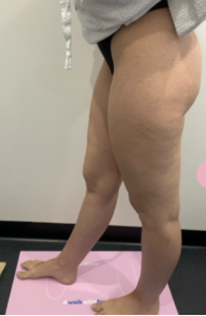
Lipoedema stage 1 – showing smooth skin and early fullness
Stage 2 Lipoedema: Uneven Skin Texture and Noticeable Nodules
In Stage 2, the skin becomes more uneven. The surface may appear dimpled or slightly lumpy. Nodules in the fat layer become easier to feel. Tissue around the knees and thighs can begin to look more irregular or column like.
Common features include:
- soft, pearl size nodules beneath the skin
- a more pronounced shape difference between the upper and lower body
- heavier legs that bruise easily
- increased discomfort after activity or heat
Stage 2 is one of the most common stages diagnosed, as changes in shape become more visible.


Lipoedema stage 2 – showing uneven texture
Stage 3 Lipoedema: Larger Lumps, Folds and Increased Volume
Stage 3 involves more advanced changes in the structure of the fat and connective tissue. Larger lobules of tissue, sometimes called folds or overhangs, may develop around the thighs, knees or hips. Skin texture becomes more uneven, and the legs may take on a more pronounced column shape.
People in Stage 3 often notice:
- larger, irregular fatty lobules
- rubbing or chafing between the thighs
- increased heaviness or tightness
- changes in mobility or gait due to bulkiness
Even within Stage 3, there is wide variation. Some people remain active and comfortable, while others experience daily challenges.


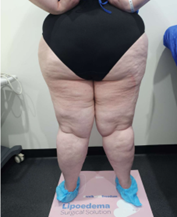
Lipoedema stage 3 – showing larger lobules
Stage 4 Lipoedema: Lipo-Lymphoedema and Secondary Fluid Changes
Stage 4 is sometimes referred to as lipo lymphoedema. This occurs when lipoedema and lymphatic flow issues coexist. Fluid retention becomes more noticeable. Skin may feel firmer or more swollen, particularly around the ankles or lower legs.
Typical signs include:
- swelling that does not fully resolve overnight
- tissue that feels firmer due to fluid accumulation
- increased heaviness or fatigue in the legs
- skin folds that may deepen
It is important to understand that Stage 4 does not occur for everyone. Some people remain in earlier stages throughout their lives.
To learn more about swelling and lymphatic changes, HealthDirect provides general information about lymphoedema.


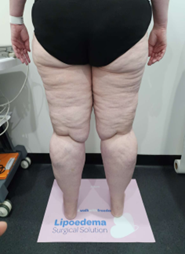
Lipoedema stage 4 – showing swelling and fluid changes
Do All People Progress Through Every Stage?
No. Lipoedema does not follow a strict timetable, and not all people progress through all stages. Many factors influence how the condition presents, including genetics, hormones, lifestyle and movement patterns. Some people remain in earlier stages for decades. Others notice changes over time.
How Staging Helps With Understanding Your Body
The lipoedema stages can help people:
- understand changes in tissue texture
- recognise common patterns in the legs and arms
- identify early signs
- communicate concerns to a clinician
- learn which conservative strategies may support comfort
If you are unsure which stage you may relate to, an assessment with a lipoedema informed clinician can help build a clearer picture.