

Short answer: yes. Lipoedema can affect women of any body size, including women who are slim or within a “healthy” weight range. Lipoedema is defined by how fat is distributed and how the tissue behaves, not by total body weight. A woman can have a slim waist and upper body, a normal body mass index (BMI), and still have painful, disproportionate fat in her hips, thighs, legs or arms.
Many slim women with lipoedema are told their legs are “just genetics” or that they need to exercise more. In this article, we explain why lipoedema can occur at a lower body weight, why BMI is a poor guide, which signs to look out for, and how a doctor assesses lipoedema regardless of your size.
Key takeaways
- Lipoedema can affect women of any body size, including women with a normal BMI.
- It is defined by disproportionate, symmetrical and often painful fat in the hips, legs or arms, usually sparing the hands and feet.
- BMI alone is unreliable in lipoedema; waist-to-height ratio gives a more accurate picture.
- Lipoedema is diagnosed clinically by a doctor. You do not need a referral to start with Lipoedema Surgical Solution.
Is lipoedema caused by being overweight?
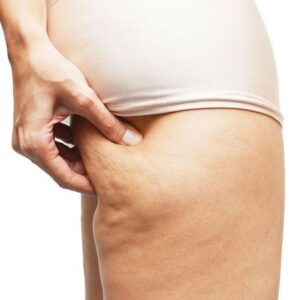
Lipoedema is a chronic condition of the fatty tissue. It typically causes a symmetrical build-up of abnormal fat in the hips, buttocks, thighs and legs, and often the arms, while the hands and feet are usually spared. The affected tissue is often tender, bruises easily and can feel heavy.
Because the condition is about the pattern and character of the fat, it is not the same as being overweight. A US consensus guideline on the standard of care for lipoedema describes it in women across a wide range of body sizes (Herbst et al., 2021), and the 2024 German S2k guideline describes lipoedema as a clinical diagnosis based on disproportionate fat distribution, pain and the exclusion of other causes, rather than weight (Faerber et al., 2024).
Lipoedema and obesity can occur together, and many women with lipoedema also gain weight in other areas over time. But a woman does not need to be overweight to have lipoedema, and being slim does not rule it out.
Why is BMI misleading in lipoedema?
BMI only compares your weight with your height. It cannot show where fat is stored, whether it is painful, or whether your upper and lower body are in proportion. A woman with lipoedema in her legs may have a slim upper body that keeps her overall BMI in the normal range, even though her legs are disproportionately large.
For this reason, experts caution against relying on BMI alone in lipoedema. A 2023 study by members of the German lipoedema guideline group found that BMI on its own is unreliable in lipoedema and tends to overestimate overweight and obesity, and that waist-to-height ratio gives a more accurate picture (Brenner et al., 2023).
Lipoedema fat also behaves differently. As our FAQs explain, the fat associated with lipoedema does not respond to diet, exercise, weight-loss surgery, medication or supplements in the way other fat does. Many slim women eat well and exercise regularly, yet the affected areas stay the same or keep enlarging.
What are the signs of lipoedema in a slim woman?
In slim women, lipoedema can be easy to miss, particularly in the early stages. Features that may suggest lipoedema rather than a normal body shape include:
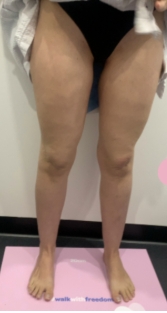
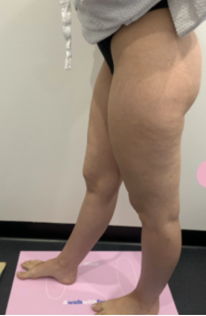
- Clear disproportion: for example, a smaller dress size on top than on the bottom, or a slim waist with noticeably fuller hips, thighs or calves.
- Symmetry: both legs (or both arms) are affected in a similar way.
- Sparing of the feet and hands: the fat often stops at the ankles or wrists, sometimes creating a “cuff” or “bracelet” effect.
- Pain and tenderness: the tissue may ache, feel sensitive to touch or feel heavy, especially at the end of the day.
- Easy bruising: bruises appear with little or no knock.
- Resistance to diet and exercise: weight comes off the upper body, but the affected areas barely change.
- Timing: changes that began or worsened around puberty, pregnancy or menopause.
Not every woman has all of these features, and some of them have other causes. Our guide to early signs of lipoedema and our overview of lipoedema symptoms and stages explain them in more detail.
What lipoedema can look like at a lower weight
Lipoedema is usually described in stages, based on how the skin and underlying tissue have changed. In the earlier stages, the skin surface may still look smooth, even though the tissue underneath feels nodular or tender. This is one reason slim women are often not diagnosed: the visible changes can be subtle, and the main complaint may be pain, heaviness or bruising rather than size.
Some women notice that their legs look “straight” or “column-shaped”, with little narrowing at the ankle, or that the inside of the knees and upper arms feel fuller and softer than the rest of the body. Our lipoedema stages guide describes how these changes can develop over time.
Why are slim women with lipoedema often misdiagnosed?
Lipoedema is still not well recognised, and slim women can face particular barriers to diagnosis:
- Symptoms such as leg pain or heaviness may be put down to exercise, posture or “tired legs”.
- Disproportion may be seen as a normal “pear shape” or family trait, even though lipoedema itself often runs in families.
- Because her weight is in the normal range, a woman may not be asked about her fat distribution at all.
- Women themselves may feel they cannot raise concerns about their legs when they are not overweight.
If something about your legs or arms does not feel right, it is reasonable to ask for an assessment, whatever your weight.
How is lipoedema diagnosed?
There is no single blood test or scan that confirms lipoedema. A doctor makes the diagnosis clinically by looking at the whole picture:
- your history, including when changes began and any family history;
- your symptoms, such as pain, heaviness and bruising;
- a physical examination of the distribution, symmetry and feel of the tissue, including whether the hands and feet are involved;
- the exclusion of other causes of swelling or disproportion, such as lymphoedema or venous disease.
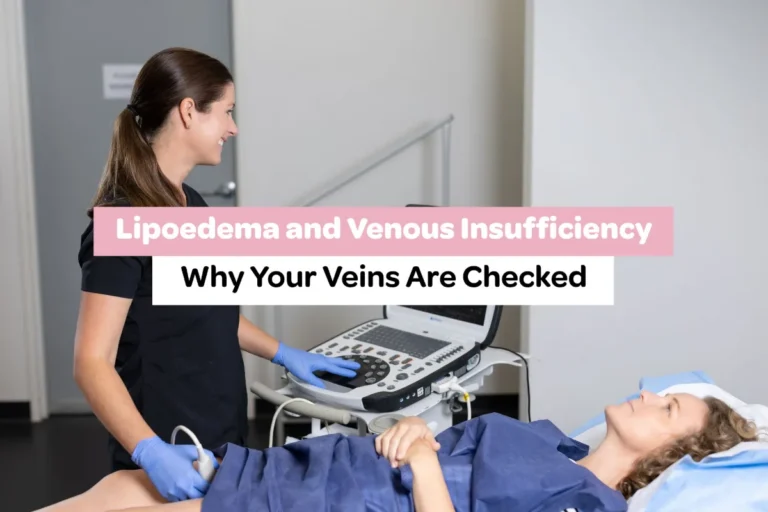
Ultrasound does not diagnose lipoedema directly, but it can help identify other conditions that contribute to leg symptoms. You can read more in what happens during a lipoedema assessment.
At Lipoedema Surgical Solution, care starts the same way for everyone: an online Lipoedema Education Session, then a one-on-one telehealth consultation. No referral is needed.
How is lipoedema managed when you're slim?
Management is based on your symptoms and goals rather than your weight. For most women, the first step is conservative management, which may include compression, manual lymphatic drainage, appropriate exercise and attention to overall health. Read more about lipoedema treatment options and how to wear compression comfortably.
Being slim does not, on its own, rule you out of any treatment option, including surgery. Whether surgery may be appropriate depends on your symptoms, the stage of your lipoedema, your overall health and your goals, not on your weight or BMI. Surgery is not suitable for everyone, and it is only considered after a full assessment and a period of conservative management. Your doctor can talk you through the options that may suit you.
Frequently asked questions
Can you have lipoedema with a normal BMI?
Yes. BMI only compares weight with height, so it cannot show disproportionate or painful fat in the legs or arms. Many women with lipoedema have a BMI in the normal range.
Does losing weight get rid of lipoedema?
No. The fat associated with lipoedema does not respond to diet, exercise, weight-loss surgery, medications or supplements in the usual way. Many women eat well and exercise regularly yet still notice the affected areas enlarge.
Where on the body does lipoedema occur?
Lipoedema most commonly affects the hips, thighs, buttocks and legs, and in many women also the arms. These areas may feel painful or tender, bruise easily, and become heavy or swollen.
What age does lipoedema start?
Lipoedema is most commonly triggered around puberty. Some women do not notice significant changes until later in life, often around hormonal events such as pregnancy or menopause.
The bottom line
Being slim does not rule out lipoedema. The condition is defined by disproportionate, often painful fat in the legs, hips or arms, not by your weight or BMI. If you recognise these features, a clinical assessment can help you understand what is happening and which management options suit you.
To learn more, visit our lipoedema diagnosis page or book a Lipoedema Education Session as a first step.
Medical disclaimer: This article provides general educational information only and is not a substitute for individual medical advice, diagnosis or treatment. Please speak with your GP or another qualified health practitioner about your own circumstances.